
Beans release volatile aromatics and oxidize oils, so you must control roast, storage and grind to preserve freshness; understanding lipid oxidation, moisture migration and volatile loss lets you predict and extend their fleeting flavor.
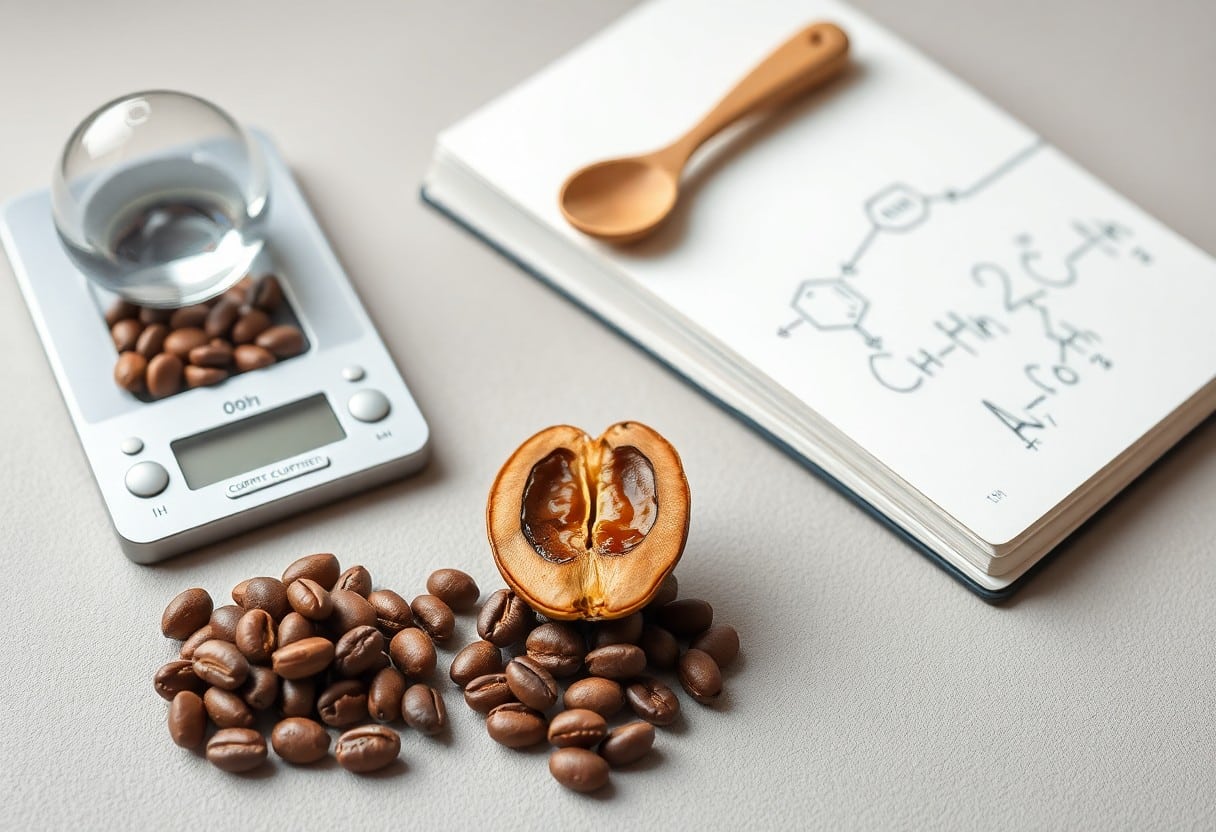
Key Takeaways:
- Lipid oxidation in roasted beans produces peroxides and aldehydes that create rancid and cardboard-like off-flavors, eroding perceived freshness.
- Volatile aroma compounds-esters, aldehydes and pyrazines-diffuse and oxidize rapidly after roasting; grinding accelerates loss by exposing more surface area.
- Storage conditions and packaging control reaction rates: oxygen ingress, temperature, humidity and residual CO2 affect staling; airtight, low-oxygen packaging, one-way valves, cool dry storage and whole-bean form prolong freshness.
The Lipid Profile: Understanding Oxidative Rancidity
Oxidation of bean lipids sets the pace for freshness loss, as you observe hydroperoxide formation converting desirable aromas into stale aldehydes and ketones that degrade cup quality.
Storage conditions like temperature, oxygen permeability, and moisture determine the rate of peroxidation, so you should prioritize low-oxygen packaging and cool, dry environments to slow rancidity.
Fatty Acid Composition and Degradation Pathways
Saturated, monounsaturated, and polyunsaturated ratios predict vulnerability: you will find linoleic- and linolenic-rich beans generate more reactive hydroperoxides that fragment into off-flavor volatiles during roasting and storage.
The Role of Lipoxygenase Enzymes in Off-Flavor Development
Lipoxygenase enzymes catalyze oxygen addition to polyunsaturated fatty acids, producing hydroperoxides that rapidly cleave into grassy, beany, or cardboard-like aldehydes you detect as early off-notes.
Enzymatic activity often persists after harvest but can be reduced by rapid drying, heat inactivation, or specific processing steps, allowing you to limit enzyme-driven flavor deterioration before non-enzymatic oxidation takes over.
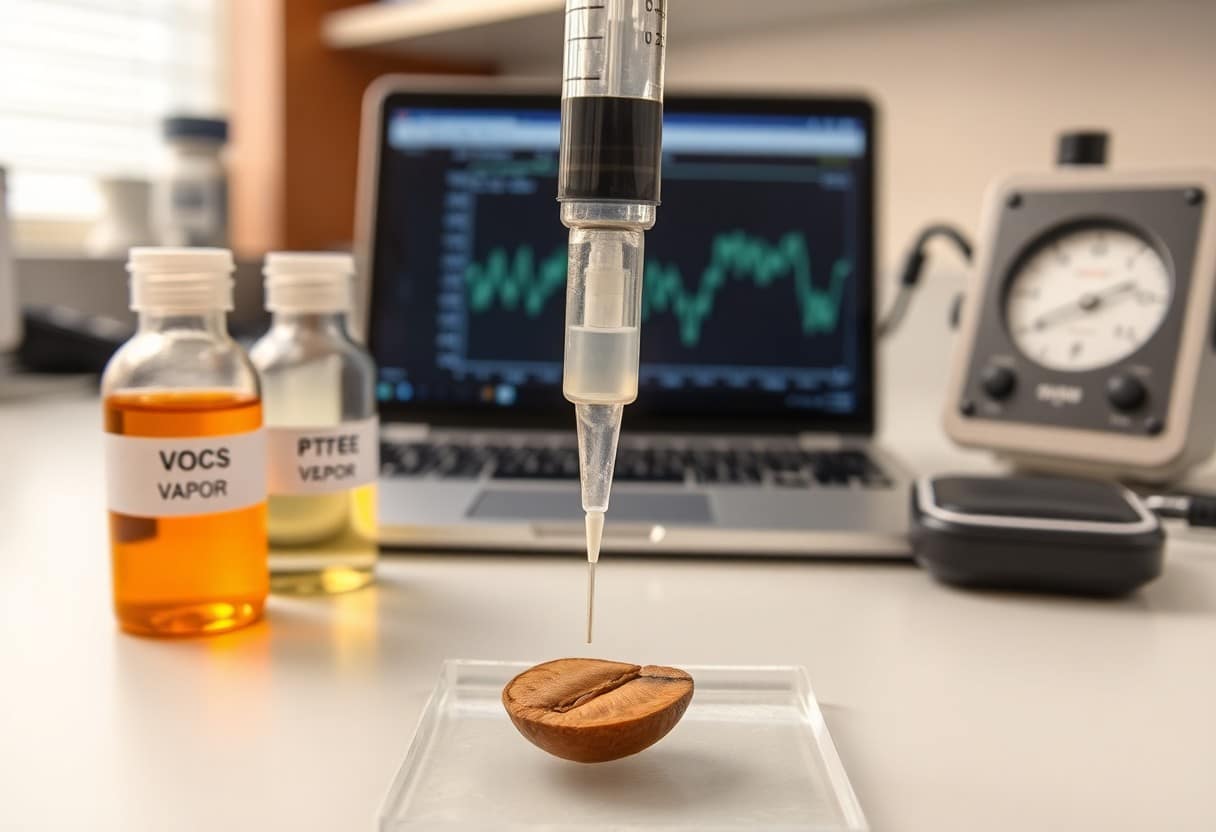
Volatile Organic Compounds and Aromatic Decline
Volatile organic compounds in beans create your immediate sense of freshness, but you notice rapid decline as light, heat, and oxygen trigger oxidation and enzymatic reactions that fragment aroma-active molecules.
Profile analyses show steep losses of low-molecular volatiles within hours, so you experience muted aroma long before beans taste overtly stale.
Depletion of Key Aldehydes and Esters
Aldehydes and esters that give fruity and green top notes react with oxygen or undergo hydrolysis, so you lose bright, volatile character as their concentrations fall below human detection thresholds.
Environmental Impact on Vapor Pressure and Scent Retention
Temperature and humidity shift vapor pressures: you will detect volatiles more quickly at higher temperatures and lose them faster during storage in warm, humid conditions.
Storage techniques such as reducing headspace, controlling temperature, and limiting air exchange slow diffusion-driven loss, and you can preserve aromatic integrity by stabilizing those environmental factors.
The Hard-to-Cook (HTC) Phenomenon
Proteins and starch matrices reorganize during storage, so you find beans resist water uptake and heat transfer; you gauge HTC by slower gelatinization and persistent gritty texture despite longer cooking.
Moisture redistribution within seeds changes porosity, and you observe uneven hydration that keeps interiors dry; you can adjust soaking conditions but the underlying chemical cross-links still dictate cook time.
Pectin De-esterification and Cell Wall Lignification
Pectin de-esterification increases negative charge on galacturonic chains, and you see diminished solubility that prevents cell separation; you can link this to tougher cotyledons and reduced palatability.
Enzymes such as pectin methylesterases and peroxidases promote lignification, and you detect increased phenolic coupling that stiffens cell walls; you might test this by lignin staining or firmness assays.
Phytate Hydrolysis and Cation Migration Mechanisms
Phytate hydrolysis liberates phosphate and frees divalent cations, and you notice those cations migrating to cell walls where they bridge de-esterified pectins, making tissues resistant to softening during cooking.
Water movement during soaking drives ionic gradients, and you will observe that high ionic strength or alkaline pH accelerates cation re-association, increasing HTC severity despite prolonged heating.
Ions like calcium and magnesium redistribute as phytate breaks down, and you can reduce HTC experimentally by applying chelators or altering soak-water composition to limit cross-link formation and improve final texture.

Maillard Reaction and Pigment Alteration
Roasting drives the Maillard reaction, and you watch pigments and aroma precursors transform as sugars and amino acids form melanoidins that darken the seed coat and shift volatile profiles; compare roast-driven changes with field observations via The Science Behind Coffee Bean #Freshness vs. #maturity.
Non-Enzymatic Browning and Nutrient Degradation
Oxidation and heat accelerate non-enzymatic browning, and you lose vitamins and antioxidants as complex Maillard products accumulate, nudging flavor toward stale, bitter notes; control oxygen, moisture, and time to slow nutrient decline.
Anthocyanin Stability and Seed Coat Discoloration
Anthocyanins are pH- and light-sensitive, so you see seed coats shift from purple to brown when acidity, metal ions, or mechanical stress destabilize these pigments; harvest timing and gentle handling help preserve visual cues of maturity.
Temperature swings and prolonged sunlight speed anthocyanin breakdown, and you can limit discoloration by rapid cooling, reducing bruising during processing, and avoiding metal contamination that catalyzes pigment loss.

Metabolic Respiration and Water Activity
Respiration drives oxygen uptake and CO2 release in stored beans, accelerating sugar depletion and volatile loss; you notice faster aroma decline under warmer, poorly ventilated conditions. Monitoring CO2 and temperature gives you a practical proxy for metabolic pace and likely shelf-life shifts.
Water activity governs the fraction of free water available for chemical and enzymatic reactions, so Maillard and hydrolytic pathways proceed faster as aw rises. You limit aw through drying and barrier packaging to reduce molecular mobility and slow freshness loss.
Enzymatic Shifts During Post-Harvest Storage
Enzymes catalyze conversion of precursors into off-flavors during storage, with lipases and peroxidases generating free fatty acids and oxidation products; you detect rancidity as green and fruity notes fade. Denaturation by heat or low-aw exposures reduces catalytic turnover.
Storage temperature shifts enzyme kinetics via a Q10 effect that accelerates hydrolysis and oxidation; you observe faster aroma loss as kinetics speed. You can adjust humidity and temperature to limit residual activity and extend freshness.
Influence of Relative Humidity on Molecular Stability
Humidity swings alter sorption layers on bean surfaces, changing molecular mobility and reorganizing protein and carbohydrate matrices; you experience either slowed or accelerated degradation depending on mean RH. Stable RH narrows those fluctuations and helps preserve volatile balance.
Stability of lipids and aroma precursors depends strongly on RH because partial hydration can expose reactive sites while still restricting diffusion; you often see peak oxidation at intermediate RH around 40-60%. Steering RH away from that window reduces unexpected chemical shifts.
Practical measures like desiccants, humidity buffering packs, or controlled-atmosphere storage let you dampen RH variability; you can use silica gel, molecular sieves, or saturated-salt buffers to keep moisture steady and minimize water-mediated reaction rates that erode freshness.
Preservative Technologies and Chemical Interventions
Engineered atmospheres and selective chemical treatments slow oxidative and enzymatic pathways that strip beans of aroma and texture, and you can quantify volatile loss to tailor interventions that extend perceived freshness under controlled conditions.
Moisture control combines with targeted stabilizers to suppress microbial growth and non-enzymatic browning, so you should monitor water activity and pair low-humidity storage with appropriate additives to retain bean quality.
Hermetic Storage and Gas Exchange Regulation
Tightly sealed containers and modified atmospheres reduce oxygen exposure and limit lipid oxidation, so you will observe markedly better retention of key aromatics when you use vacuum, inert-gas flushes, or barrier packaging instead of breathable sacks.
Antioxidant Applications for Molecular Longevity
Applied antioxidants such as ascorbates and tocopherols interrupt radical chain reactions in lipids and protect aroma precursors, and you can dose them based on lipid content and storage temperature to achieve measurable shelf-life gains.
You can also combine natural polyphenols with inert carriers to target specific reactive species, with sensory trials showing improved aroma retention when antioxidants are paired with low-oxygen storage.
Trials demonstrate that application timing and concentration matter, so you must account for roast degree and surface area when treating batches to avoid off-notes while preserving desirable volatiles.
Conclusion
With these considerations you see how volatile aromatics, lipid oxidation and enzymatic activity drive the fleeting freshness of beans, while moisture, heat and increased surface area accelerate flavor loss. Storage in small, airtight, opaque containers and delaying grinding reduces exposure to oxygen and heat, so you preserve aroma longer. Your choices at roast, grind and storage directly determine how long beans taste fresh.
FAQ
Q: What chemical processes make roasted coffee beans lose their fresh aroma so quickly?
A: Roasted beans lose freshness through a mix of physical release and chemical change. Volatile aroma compounds evaporate and diffuse away from the bean matrix, while lipids undergo autoxidation to form peroxides that break down into aldehydes (for example, hexanal) and ketones that smell stale or cardboard-like. Maillard-derived aroma molecules and sulfur-containing thiols react or volatilize over days, and chlorogenic acids and other phenolics oxidize or transform during storage, reducing aroma complexity.
Q: Which volatile compounds define “fresh” coffee aroma and how do they evolve after roasting?
A: Fresh coffee aroma is carried by dozens of volatile classes: furans (caramel, sweet), pyrazines (nutty, roasted), thiols and sulfides (roasty, coffee-character), aldehydes and ketones (fruity, buttery), and esters (fruity, floral). Highly odor-active thiols such as 2-furfurylthiol appear quickly during roast but are also chemically fragile and decline by reaction or evaporation. Lighter, more volatile compounds disappear within hours to days; heavier Maillard and melanoidin-related volatiles persist longer but change in character through slow reactions.
Q: How does lipid oxidation produce off-flavors in stale coffee?
A: Unsaturated lipids in beans react with oxygen to form hydroperoxides that break down into shorter-chain aldehydes and ketones. Aldehydes such as hexanal and nonenal impart green, cardboard, or fatty off-notes. Grinding increases exposed surface area and accelerates oxygen contact, speeding the formation of these staling compounds. Native antioxidants (tocopherols, some phenolics) and roasting-created melanoidins slow oxidation, but those defenses diminish over time and with higher roast degrees.
Q: What role does CO2 degassing play in the changing chemistry of freshly roasted beans?
A: Roasted beans release CO2 rapidly after roast; that degassing changes headspace composition and drives volatile loss by carrying aroma molecules out of the bean pores. High CO2 levels in freshly roasted beans also transiently limit oxygen ingress into the bean interior, offering short-term protection from oxidation. Degassing peaks in the first 24-72 hours and continues for days to weeks, which is why aroma and crema in espresso evolve in the days after roast.
Q: Which storage factors most accelerate chemical degradation of bean freshness?
A: Oxygen exposure is the main driver of chemical decay because it enables lipid oxidation and many secondary reactions of aroma compounds. Warm temperatures increase reaction rates and volatile diffusion. Light can photo-oxidize some components, while humidity promotes hydrolysis of acids and makes beans absorb external odors. Packaging that limits oxygen and light, such as nitrogen-flushed or vacuum-sealed opaque containers with one-way valves, slows these processes.
Q: How do roast degree and grind size influence the chemistry of staling?
A: Darker roasts lose some precursor molecules and form more porous structures, which speeds volatile escape and oxygen access; that often produces a faster perceptible decline in aroma despite stronger roast notes. Finer grind increases surface area dramatically, accelerating both volatilization of aroma components and oxidation of lipids. Whole beans stored intact maintain chemical integrity far longer than pre-ground coffee.
Q: How can freshness loss be measured and what practical steps slow the chemical decay?
A: Analytical methods such as SPME-GC-MS, headspace analysis, and sensory cupping track volatile profiles and identify staling markers (for example, rising hexanal). Practical measures that slow chemical decay include buying freshly roasted whole beans in small quantities, storing sealed in opaque, low-oxygen containers at cool, dry temperatures, avoiding frequent bag opening, and using one-way-valve or nitrogen-flushed packaging. For long-term storage, deep-freezing fully sealed whole beans limits molecular mobility and oxygen reactions; avoid repeated thaw cycles. Grinding immediately before brewing preserves the largest fraction of original aromatics.