
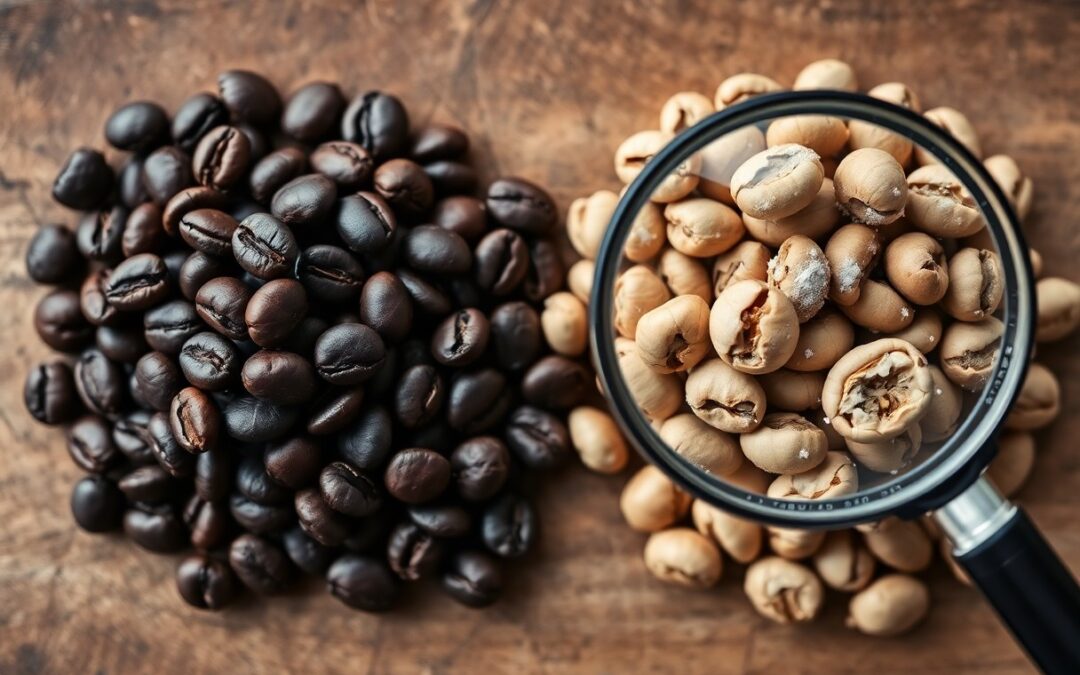
There’s a set of visual, olfactory, and tactile signs you can learn to detect when bean brilliance wanes, enabling timely sorting, storage adjustments, and brewing choices.
Key Takeaways:
- Aroma loss, flat or papery flavor, muted acidity and body signal bean degradation; visual signs include faded color, oily sheen on dark roasts, and brittle or powdery grounds.
- Quick checks-sniff the open bag, perform a hot-water bloom, or do a brief cupping-reveal freshness: bright, complex notes indicate good beans while cardboard, stale, or sour notes indicate decline.
- Store whole beans in an airtight, opaque container in a cool, dry place away from heat and light; buy smaller quantities and grind immediately before brewing to preserve volatile aromatics.
The Science of Surface Gloss
Surface sheen signals the balance between microtexture and a thin lipid film, so you judge freshness and roast character by its evenness. Look for patchy shine or bead formation under strong light, since those patterns hint at oil migration or uneven roasting rather than simple age.
Gloss intensity reflects how light scatters off micro-roughness versus continuous oil layers, and you can use a handheld lamp to amplify differences. Compare small batches side by side to separate roast-driven gloss from signs of deterioration.
Lipid Migration and Oxidation Rates
Lipid migration moves oils from the bean core to the surface over days or weeks, sped by warmth and porous structure, so you monitor storage conditions closely. You assess oxidation rates by checking aroma and surface texture: matte, tacky beans and stale notes indicate polymerized, degraded oils.
Impact of Roast Profiles on Oil Visibility
Roast profile dictates how readily oils appear: longer development and higher end temperatures force lipids outward, which you will see as increased surface shine. You note that lighter roasts often remain matte, while extended dark roasts show visible oil sooner.
Darker roasts break down cell walls and reduce oil viscosity, so you should expect larger beads and quicker coalescence during storage. This distinction helps you tell whether gloss stems from roast degree or from age-related rancidity by cross-checking aroma and roast date.
Visual Markers of Cellular Breakdown
Cells on bean surfaces develop fine fissures, pitting, and an uneven sheen that betray internal breakdown, so you can often spot tiny cracks around seams and the hilum where moisture loss and cell collapse begin.
Distinguishing Dullness from Natural Matte Finishes
Surface dullness from degradation appears patchy and may leave a powdery residue when you rub it, while a true matte finish remains evenly colored and smooth to the touch, letting you differentiate wear from intended texture.
Identifying Color Fading and Discoloration
Shifts toward gray, brown, or splotchy tones indicate pigment breakdown or oxidation, and you should compare samples under neutral light to register subtle fading or early staining.
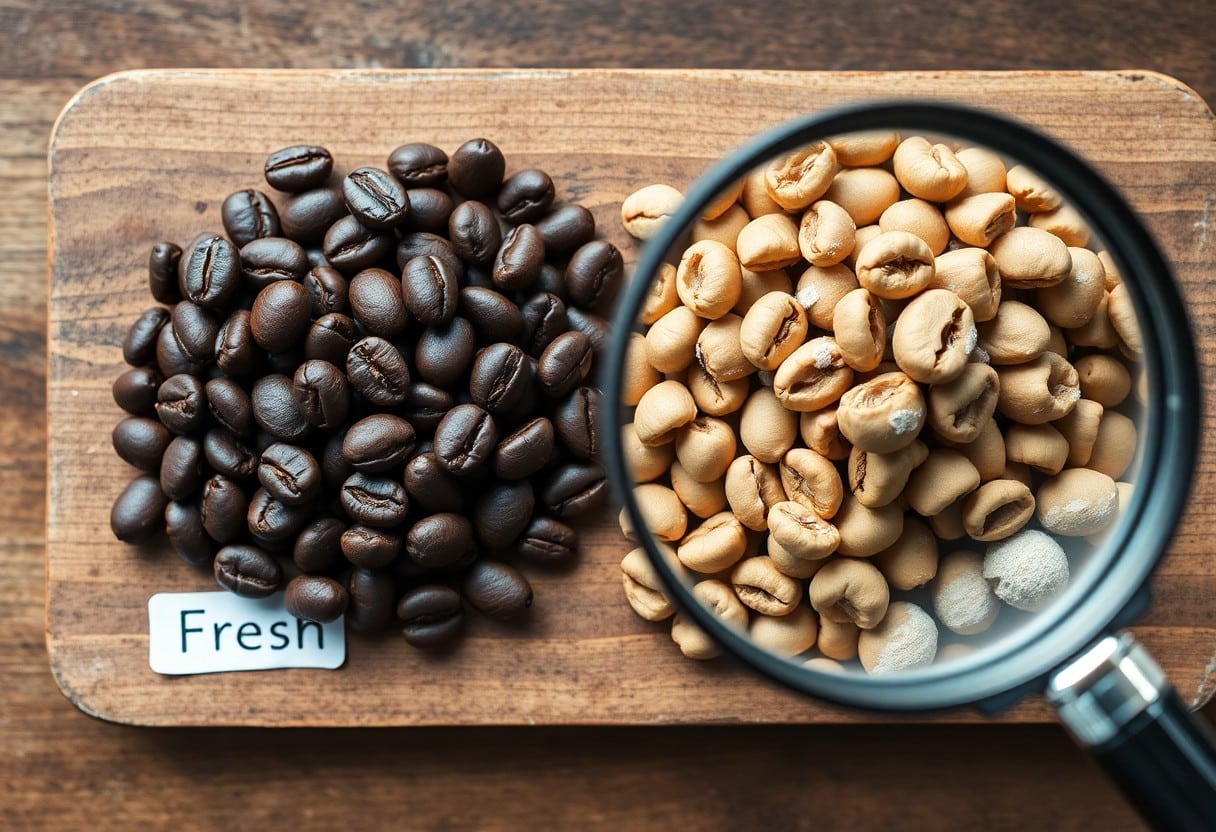
Examine beans under strong light or magnification to map discoloration patterns-localized spots often point to microbial activity while uniform fading suggests prolonged light or heat exposure, and you can also sniff for musty odors that confirm biological degradation.
Analyzing the Aromatic Decline
You map subtle shifts in fragrance intensity, noting which notes fade first-top citrus and floral cues often vanish while base and roasty tones persist, signaling oxidation, moisture damage, or age; use a cupping grid and timed sniffs to compare against fresh references.
Dissipation of Volatile Organic Compounds
Volatiles escape rapidly, so you grind and sniff immediately then at set intervals to quantify aromatic loss, letting the rate of decline reveal impacts from roast, storage, or humidity and informing whether the batch retains acceptable brightness.
Detection of Rancid and Musty Undertones
Rancid undertones manifest as greasy, stale, or cardboard-like notes you can detect with focused inhalation and palate checks, and training with known oxidized oils helps you separate genuine off-flavors from natural roast bitterness.
Musty aromas resemble damp basements or hay, and you can amplify detection by moistening a small sample and scoring its intensity so you can isolate contaminated beans and prevent cross-batch taint.
Physical Texture and Structural Fragility
Texture shifts from smooth, pliable beans to brittle, chipped fragments; you can feel the difference when pressing a bean between thumb and forefinger. Structural fragility increases dust and uneven particles, making dosing erratic and dulling delicate flavor layers.
Crumbles in hoppers and dosing systems signal weakened cell walls; you should inspect storage conditions and rotate stock to limit mechanical breakdown and preserve extraction consistency.
Loss of Bean Elasticity and Moisture
Moisture decline reduces elasticity so beans snap instead of yielding, and you’ll notice more fractured surfaces and reduced aroma release. To check, press a few beans-dry, papery resistance indicates moisture loss that alters solubility and mouthfeel.
Impact of Staling on Grinding Consistency
Grinding becomes uneven as stale beans create a wider particle-size distribution; you’ll see excess fines and coarse shards that destabilize puck formation and extraction time. Adjustments in grind and dose become necessary to compensate.
Finer particles from embrittled beans increase clumping and static, so you should consider coarsening the grind, trimming dose, and cleaning burrs more often to restore steady flow and predictable extraction.
External Catalysts of Degradation
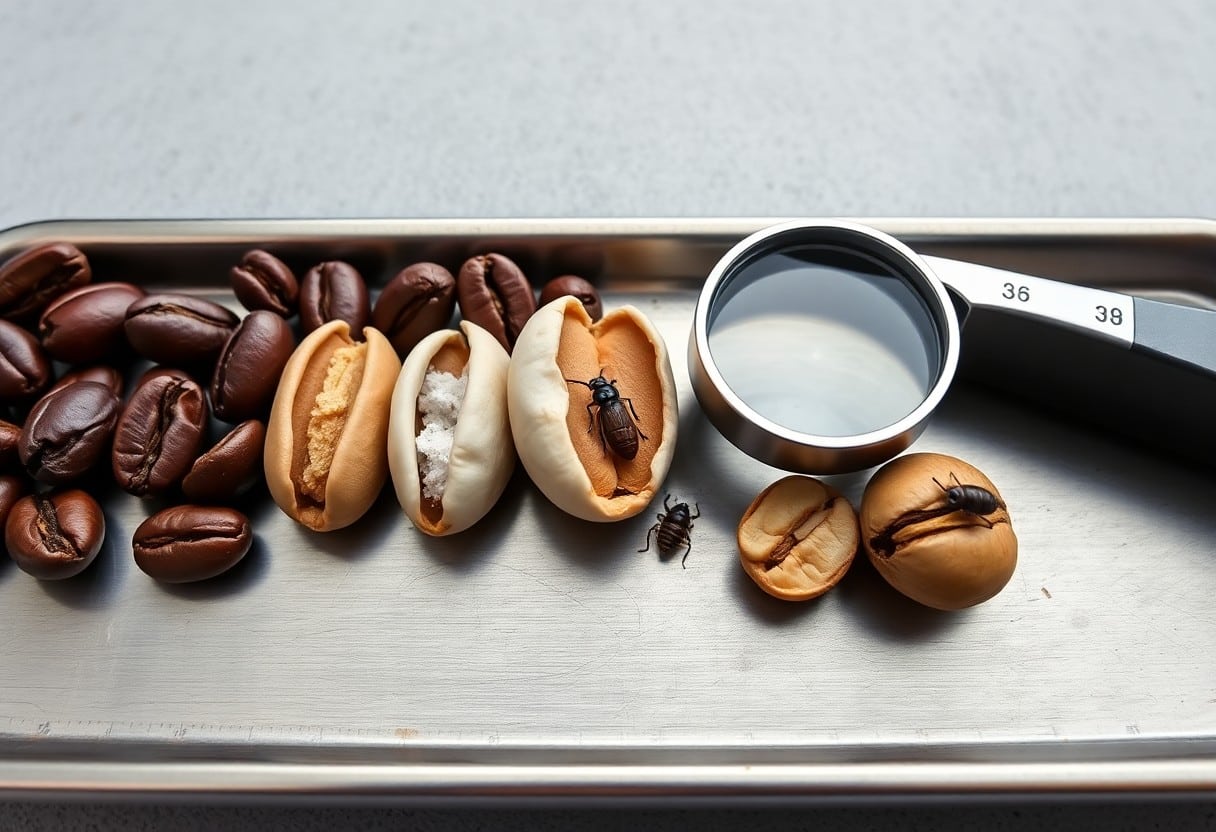
External forces such as light, oxygen, moisture, and airborne contaminants drive the slow loss of bean quality, and you will detect changes in aroma, color, and texture before flavor collapses. Store beans in opaque, airtight containers, reduce headspace, and inspect regularly so you can isolate compromised batches quickly.
Summary of External Catalysts
| Catalyst | Observable Effect |
|---|---|
| Light (UV) | Color fading, oil breakdown, rancid notes |
| Oxygen | Oxidation of lipids and aromatics |
| Humidity | Mold growth, clumping, loss of crunch |
| Pollutants | Off-odors and surface contamination |
Photo-oxidation and Ultraviolet Exposure
Sunlight provokes photo-oxidation that strips important oils and pigments, so you must prevent UV contact to preserve brightness and aroma. Use UV-blocking packaging, keep beans in dark storage, and rotate inventory; early bleaching or off-smells signal oxidative degradation needing immediate action.
Temperature Fluctuations and Humidity Risks
Temperature swings promote moisture migration and accelerate chemical reactions, exposing you to mold, staling, and loss of volatile flavors. Keep beans away from heat sources and cold drafts, and aim for consistent conditions rather than frequent daily shifts that drive condensation.
Control of humidity around 50-60% and temperature near 18-22°C reduces moisture uptake and slows lipid oxidation, so you should monitor with a hygrometer and add desiccants or climate control when necessary. Rapid heating or cooling creates surface condensation that invites microbial growth and texture changes.
Temperature and Humidity: Risks & Fixes
| Risk | Recommended Action |
|---|---|
| Rapid temperature swings | Stabilize environment; avoid vents and sunlight |
| High humidity | Use dehumidifiers or desiccants; airtight storage |
| Low humidity | Use sealed packaging to prevent drying and flavor loss |
| Condensation | Slow temperature changes; inspect and dry affected beans |
Strategic Preservation Techniques
Choose airtight, opaque containers and store beans away from heat so you slow aromatic loss and protect delicate oils tailored to roast level and brew timing.
Maintain stable, cool conditions and rotate stock frequently so you use older batches first and limit progressive oxidation that flattens cup clarity.
Optimal Storage Vessel Selection
Select glass or stainless steel vessels with reliable seals to minimize air exchange and avoid clear containers unless they remain in darkness.
Prefer one-way valves for short-term whole-bean storage and resealable vacuum systems for longer holds to reduce oxygen contact without crushing the beans.
Managing Carbon Dioxide Outgassing
Measure CO2 displacement when you transfer fresh roasts and allow a controlled rest period so trapped gas doesn’t accelerate staling or compromise packaging.
Purge containers with a brief, gentle inert-gas flush if you plan extended storage to displace residual CO2 and oxygen while preserving volatiles.
Monitor internal pressure in sealed vessels and install one-way valves or schedule airing intervals so you release built-up gas without inviting excessive oxygen exposure.
Final Words
Following this you will read cues: dull surface, muted aroma, oily residue, and uneven grind that signal bean degradation. You can test freshness by sniffing for lively acidity, snapping a raw bean for crispness and color, and performing a short roast to judge flavor clarity. You will discard or blend degraded beans to preserve cup quality and monitor storage conditions to prevent repeat decline.
FAQ
Q: What does “degrading bean brilliance” mean?
A: Degrading bean brilliance describes the progressive loss of coffee bean quality after roasting, shown by fading aroma, altered flavor, loss of acidity and sweetness, and development of off-notes like staleness, sourness, or rancidity.
Q: What visual cues indicate beans are degrading?
A: Look for a dull, lifeless surface, uneven color, excessive oil pooling on dark roasts, visible mold or white spots, cracked or broken beans, and tiny holes from insect damage.
Q: What aroma changes signal degradation?
A: Fresh beans emit complex floral, fruity, nutty, or chocolatey scents; degraded beans smell flat, papery, cardboard-like, musty, sour, or chemically off, and rancid oil aromas can appear in older dark roasts.
Q: How does taste reveal degraded beans?
A: Tasting shows loss of clarity and brightness, muted sweetness, flattened body, and emergence of unpleasant notes such as sourness, cardboard, metallic or soapy flavors; aftertaste becomes short or bitter rather than clean and balanced.
Q: How do roast level and storage affect the speed of degradation?
A: Darker roasts expose more oils on the surface, increasing oxidation and quicker flavor loss; poor storage-exposure to air, light, heat, or moisture-accelerates staling, while intact whole beans stored airtight, cool, and dark retain quality longer.
Q: What simple tests or tools help detect early degradation?
A: Perform a sniff test of whole and freshly ground beans, grind a small sample and brew a pour-over to evaluate aroma and flavor, inspect beans under good light, and use a moisture meter for storage concerns; professional cupping highlights subtle declines in complexity.
Q: How can I extend bean brilliance once I notice early signs of decline?
A: To slow further decline, move beans to an opaque, airtight container, keep them in a cool, dark place, buy smaller quantities and grind just before brewing, and freeze only in truly airtight bags for long-term storage while avoiding repeated thaw cycles.