
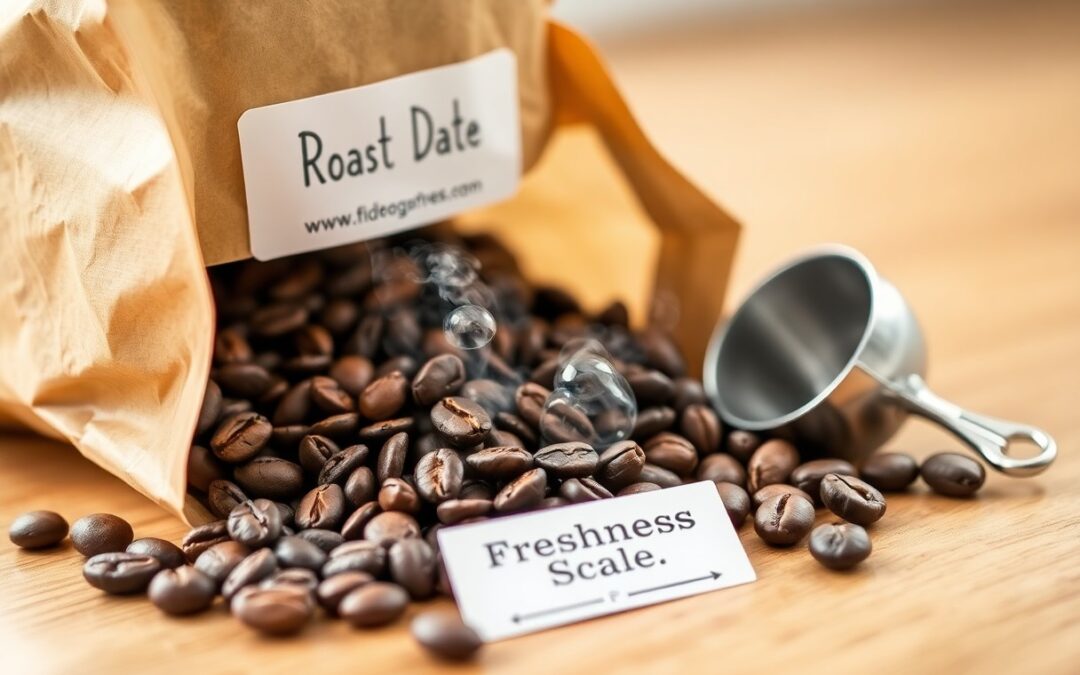
It’s the rapid release of CO2 after roasting that alters aroma, crema, and extraction, so you perceive coffee as fresher or muted; understanding degassing helps you adjust rest, grind, and brew to capture peak flavors.

Key Takeaways:
- Degassing releases CO2 and volatile aromatics; escaping CO2 reduces physical suppression of aroma and shifts perceived freshness as aroma intensity and balance change.
- Timing of degassing affects freshness cues: early controlled venting retains bright, volatile notes while prolonged exposure and oxygen contact promote oxidation and loss of brightness perceived as staleness.
- Packaging and roast level modify degassing effects by controlling CO2 retention and oxygen exposure, so sealed containers or darker roasts alter how quickly and in what direction freshness is perceived.
The Mechanics of Carbon Dioxide Diffusion
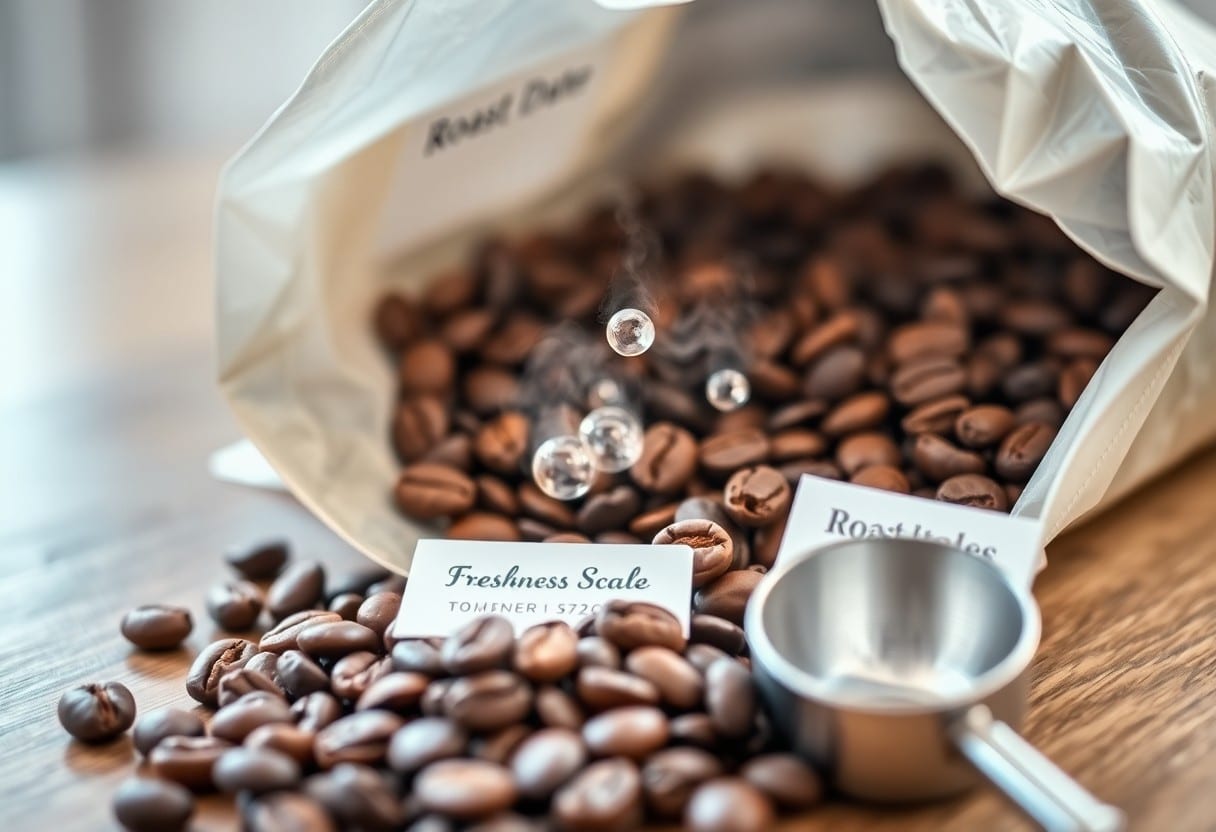
Roast carbon dioxide occupies inter- and intra-cellular pores and diffuses outward as beans cool, carrying volatile compounds that shape your first aromatic impression; you register freshness when that early flux favors bright, high-volatility notes before slower equilibration mutes them.
CO2 pressure gradients drive both convective pulses and molecular diffusion, altering headspace composition over hours to days so you perceive a moving freshness spectrum as gases redistribute and aroma balance shifts.
Cellular Porosity and Gas Entrapment
Porosity determines pathway connectivity and effective diffusivity, so you notice faster degassing from beans whose roasting created larger, interconnected pores that let CO2 and volatiles escape more readily.
Entrapped gas in closed vesicles relies on slow matrix diffusion, producing a delayed, subdued release that makes older or poorly handled roasts taste less immediate unless you grind or agitate to expose fresh surfaces.
Internal Pressure Gradients Post-Roast
Pressure differences between hot interiors and cooler exteriors force gas through membranes and fissures, generating short aroma bursts that signal freshness to you when release coincides with grinding or brewing.
Steep gradients can induce microfracturing and uneven volatile loss, so you experience batch variability unless degassing is moderated through controlled cooling and storage practices.
Microstructure-driven diffusion follows Fickian behavior modified by pore-scale advection, and you can approximate degassing rates by combining permeability, temperature-dependent gas viscosity, and partial-pressure differentials to predict how quickly perceived freshness will decline.
Impact on Extraction Dynamics
Roast degassing affects the way you extract flavors by changing pore pressure and CO2 release; trapped gas delays wetting, biases early soluble leaching, and can make brightness appear more pronounced yet less integrated.
Wetting behavior shifts when gas-filled voids persist, so you often see uneven saturation that forces pockets of over- and under-extraction, skewing sweetness, acidity, and the overall freshness spectrum you perceive.
CO2 as a Physical Barrier to Water Saturation
CO2 lodged in the matrix creates a physical barrier that redirects your water flow, reducing contact with key solubles and producing cups that feel thinner or artificially bright until gases dissipate.
The Role of Blooming in Gas Displacement
Blooming drives a rapid expulsion of CO2 that can push water away from particles, so if you mismanage pre-infusion you introduce channeling and uneven extraction that alters perceived freshness.
Timing of your bloom governs how much gas escapes before the main pour, allowing you to control saturation and the extraction balance between volatile acids and heavier solubles for a cleaner, fresher profile.
Observation of bloom vigor offers practical feedback: vigorous bubbling signals high residual CO2 and prompts you to extend pre-infusion or adjust grind to avoid gas-driven pockets that mask nuanced freshness.
Sensory Evolution of the Flavor Profile
Sensory changes after roast degassing shift how you perceive freshness, with rapid CO2 release flattening aromatics and highlighting acidity so you must reassess age by tasting rather than scent alone.
Ongoing off-gassing reshapes the volatile mix, so you will witness an evolving balance between brightness and depth across hours to days depending on roast and storage.
Masking of Delicate Volatiles by Carbonic Acid
Carbonic acid created when dissolved CO2 forms in the cup suppresses fragile esters, so you often miss floral and fruit top notes until gas dissipates and the headspace clears.
When you sip immediately after roast, the carbonic bite can mimic staleness, biasing your assessment toward sharpness even if underlying sweetness is intact.
Development of Clarity and Sweetness Post-Peak
Rested beans reveal increasing clarity as CO2 leaves the matrix, allowing sugars and caramelized compounds to read through and present a sweeter, more integrated profile.
Clarity helps you separate true freshness from masking effects by letting subtle sugar and roast-derived notes articulate, altering how you score age and quality.
Storage temperature and grind-to-brew delay influence how quickly that clarity emerges, so you should monitor rest time and brewing timing to see sweetness peak and avoid premature judgments.
Defining the Freshness Spectrum Window
Freshness window narrows as degassing progresses; you monitor CO2 loss to pinpoint when acidity and aromatics peak versus when staling begins. Tracking olfactory and tasting cues alongside gas measurements helps you set a practical freshness window for each roast profile.
Light vs. Dark Roast Degassing Timelines
Light roasts retain more trapped volatiles so you may see a delayed aromatic peak, often two to seven days post-roast depending on grind and packaging. Dark roasts shed gas faster and develop oil migration that can shorten the perceived freshness window to just a few days.
Environmental Factors Influencing Gas Loss
Ambient temperature, humidity, and pressure change the rate at which CO2 diffuses from beans, so you adjust storage and brew timing to protect flavor. You also consider packaging permeability and whether beans sit in open air or sealed containers.
- Higher temperatures increase molecular motion, speeding degassing.
- Elevated humidity can encourage moisture uptake and alter volatile release.
- Lower barometric pressure allows faster gas escape.
- The interaction of temperature and humidity determines how quickly your freshness window shifts.
Packaging choices change how you manage degassing: one-way valves let CO2 escape without oxygen ingress, so you preserve aromatics longer; you should choose low-permeability bags for extended windows. You can also control ambient conditions to slow gas loss and stabilize perceived freshness.
- Valve-equipped bags prevent reoxidation while allowing CO2 to vent.
- Vacuum sealing halts off-gassing but can compress oils and alter mouthfeel.
- Cold storage slows molecular diffusion and maintains brightness.
- The combined packaging and storage strategy defines how long you can preserve peak freshness.
The Relationship Between Degassing and Oxidation
Degassing strips the roast of dissolved CO2 that had buffered oxygen contact, so you notice aromatic brightness shift as volatile compounds escape. The pace of gas loss determines how quickly oxidative reactions mute flavors you associate with peak freshness.
Oxygen then penetrates more easily once CO2 pressure drops, and you perceive oxidation as flattened acidity and dulled sweetness. You can track these sensory changes to time packing and consumption for the profile you prefer.
Protective Qualities of Residual CO2
Residual CO2 creates a tiny protective blanket that slows oxygen-driven degradation, which helps you enjoy livelier notes for longer after roast. You should factor packaging venting and headspace when judging how much protection remains for that initial freshness.
The Transition Point from Peak to Staling
Peak freshness exists while CO2 release and aromatic volatility stay in balance, and you experience the cup at its most expressive. You will find that once volatility falls below a threshold, signs of staling begin to dominate the sensory picture.
Aspects such as roast degree, grind, and storage temperature shift where that threshold lies, so you adapt your handling to preserve the window you prefer. You may use daily tastings or simple CO2 measurements to see when the profile starts to flatten.
You can quantify the transition by noting when bright citrus or floral notes fade and duller, stale descriptors appear, then use that curve to optimize roast-to-cup timing and packaging choices for each lot.
To wrap up
Now you see roast degassing alters perceived freshness because escaping CO2 temporarily suppresses or releases volatile aromatics, changing intensity and balance; early release highlights bright floral and fruity notes, while delayed release mutes aroma.
You must time tasting, cooling, and packaging to align degassing with desired freshness: too soon or too late shifts the spectrum toward flat or overly sharp profiles, and grind size and storage temperature further modulate how you perceive freshness.
FAQ
Q: What is roast degassing and why does it matter for perceived freshness?
A: Roast degassing is the post-roast release of trapped carbon dioxide and other volatile compounds from roasted coffee beans. The escaping CO2 carries or suppresses aromatic volatiles, alters extraction dynamics during brewing, and changes crema formation in espresso. Those physical and chemical shifts modify aroma intensity, sweetness, acidity balance, and mouthfeel, producing the sensory differences people label as “freshness.”
Q: How does CO2 release change the perceived freshness spectrum?
A: CO2 influences aroma volatility and extraction kinetics. High internal CO2 can suppress volatility of some desirable aromatics and cause harsh, carbonic or metallic impressions when overabundant in the cup. Moderate CO2 levels enhance bloom and crema, emphasizing bright, lively notes associated with freshness. Low CO2 exposed beans tend to lose top-note aromatics and develop flat, stale perceptions as oxidation and volatilization diminish complexity.
Q: How long after roasting should beans rest for optimal freshness perception?
A: Optimal rest varies by roast and intended brew. Light roasts commonly benefit from 3-7 days to allow initial degassing and development of acidity and aroma clarity. Medium roasts often peak between 2-5 days. Dark roasts can be ready within 12-48 hours but may decline faster. Espresso preparations sometimes prefer shorter rests (24-72 hours) to retain CO2 for crema; filter brewing often favors slightly longer rests for aroma balance.
Q: How does packaging affect degassing and the way freshness is perceived?
A: One-way valves on bags allow CO2 out while limiting oxygen ingress, preserving volatile aromatics and slowing oxidative staling, which maintains perceived freshness longer. Vacuum-sealed or nitrogen-flushed packaging removes oxygen but can trap CO2; that trapped gas can blunt aroma release until opened. Poor sealing or transparent, oxygen-permeable materials accelerate oxidation, flattening brightness and accelerating stale flavors.
Q: How do grind size and brew method interact with degassing to change freshness perception?
A: Freshly roasted, CO2-rich beans produce more vigorous bloom in pour-over and more crema or channeling issues in espresso. Fine grinds and high-pressure extraction can amplify CO2-driven carbonic sensations and uneven extraction; coarser grinds and gentler methods allow more even release of aromatics. Pre-grinding long after roast increases surface-area oxidation, reducing perceived freshness regardless of brew method.
Q: What roast, bean origin, or processing factors alter degassing rates?
A: Roast level, bean density, development time, moisture, and processing all affect degassing. Darker, more developed roasts usually generate and release CO2 more rapidly due to greater cellular rupture. High-density beans and light roasts often retain CO2 longer and degas more slowly. Natural or honey-processed coffees can show different volatile profiles and degassing behaviors compared with washed coffees because of residual sugars and cell matrix differences.
Q: How can roasters, baristas, or home brewers assess and manage freshness across the degassing timeline?
A: Conduct simple sensory checks by smelling whole beans, grinding a small sample, and evaluating bloom behavior and aroma during the first pours. Track days post-roast and log flavor shifts for each roast profile and brew method. Use one-way valve packaging for short-term retail freshness and label roast dates. For espresso, experiment with shorter rests for desired crema; for filter, allow a few extra days for aromatics to stabilize. Maintain airtight storage away from heat, light, and oxygen to slow oxidative decline.