
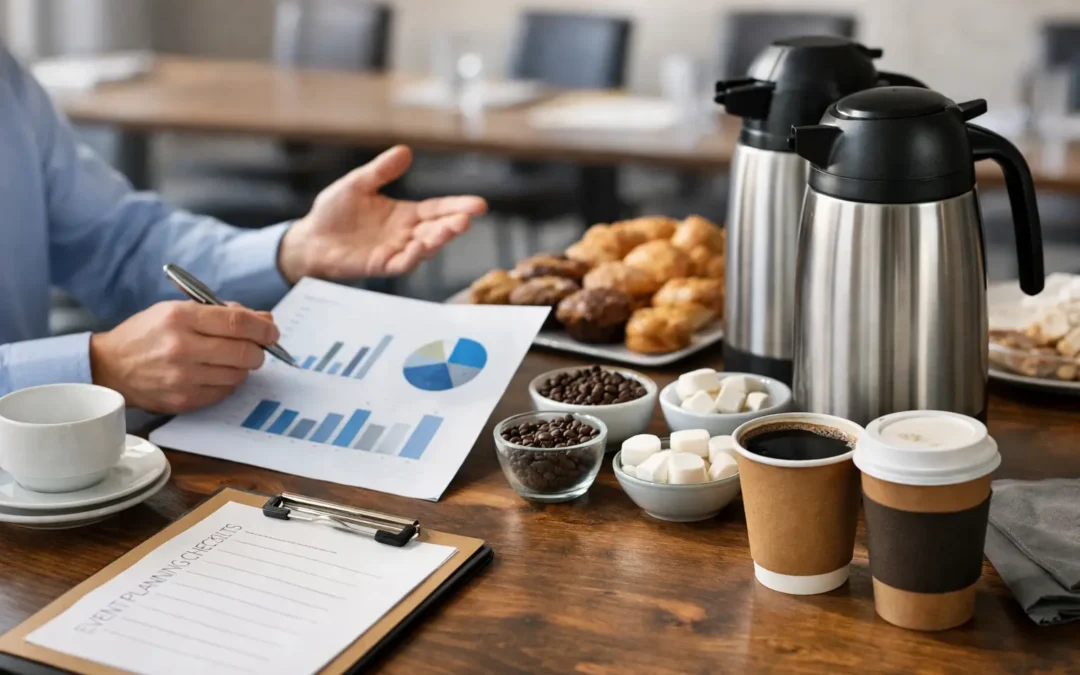
A flat white queue can make or break the mood of an event. Get it right, and people feel looked after from the first cup. Get it wrong, and you end up with lukewarm urn coffee, a messy service area, or guests wandering off to find a café down the road. If you’re working out how to order event coffee, the best place to start is not the beans. It’s the experience you want people to have.
For some events, coffee is a practical necessity. For others, it’s part of the atmosphere, the hospitality, and the brand impression. A morning conference needs fast service and dependable volume. A product launch might need beautifully made drinks that feel polished and photogenic. A community day often needs flexibility, broad appeal, and a setup that can keep moving with the crowd. The right coffee order depends on the job it’s doing.
Start with the event, not the coffee cart
Before you book anything, get clear on the shape of the event itself. Time of day matters more than most people expect. If guests arrive at 8:00 am, demand spikes fast and early. If coffee is offered after lunch, orders tend to be lighter and more selective. A three-hour open service has different needs from a one-hour rush before a keynote.
Guest count matters too, but not in a simple one-cup-per-person way. At a networking breakfast, many guests will want one drink straight away and some will come back for another. At a wedding or private celebration, coffee may peak later, especially if it’s paired with dessert. If the crowd includes office teams, exhibitors, or trade staff, they often drink coffee with real intent and real regularity.
The venue will shape the order as much as the guest list. Indoor foyers, outdoor activations, worksites, school grounds, and corporate car parks all ask for different setups. Access, power, water, bump-in times, and space for queues can all affect what is realistic. Great event coffee feels effortless to guests because the planning underneath it is solid.
How to order event coffee for the right service style
The biggest decision is usually not which roast to serve. It’s which service model suits the event.
A mobile coffee van is often the easiest option when you want café-quality drinks on site without building a temporary café from scratch. It suits corporate functions, school events, community gatherings, branded activations, and private celebrations where convenience matters. The equipment, workflow, and service team arrive ready to go, which keeps pressure off your venue and your event staff.
A smaller barista setup can work well for tighter indoor spaces or more intimate events. This can feel a little more tailored, especially when the guest count is modest and the brief is more premium than high-volume. The trade-off is that the space and access requirements need to be carefully checked.
There is also the question of whether you want hosted coffee or user-paid coffee. Hosted service means you cover drinks for guests, which creates a more generous and polished experience. It works particularly well for staff appreciation days, conferences, client events, and launches where hospitality is part of the message. User-paid service can make sense for public events with mixed foot traffic, but it changes the feel. People become customers rather than invited guests, and that affects flow, dwell time, and perception.
Get the numbers right without overordering
One of the trickiest parts of how to order event coffee is estimating demand. Plenty of organisers either overthink it or leave it too vague. A better approach is to think in waves.
If your event starts in the morning, expect an early surge. If coffee is available all day, demand usually comes in peaks around arrival, mid-morning, after lunch, and during breaks. If you know the run sheet, you can predict these surges well enough to book service that keeps pace.
Audience type matters as much as headcount. A room full of office professionals at an 8:30 am seminar will drink differently from families at a Saturday community fair. Weather plays a part as well. Cold Adelaide mornings can push demand up quickly, while a hot afternoon may shift more guests toward iced options if they are available.
It helps to give your coffee provider a realistic attendance range, not just the top-line number on your registration sheet. If 250 people are invited but only 180 are likely on site during the coffee window, say so. Good operators can guide you from there. Accuracy is better than optimism when queues and service speed are on the line.
Choose a menu your guests will actually order
This is where quality really shows. Most guests want familiar favourites done properly. Espresso-based classics such as flat whites, lattes, cappuccinos, long blacks, and hot chocolates cover the bulk of demand at most events. Tea often matters too, especially for mixed-age groups and broader corporate audiences.
Alternative milk is no longer a niche request. Oat, almond, and lactose-free options are expected at many events, particularly in workplace and wellness-focused settings. You do not need an enormous menu, but you do need a thoughtful one. A short menu executed beautifully beats a sprawling menu that slows everything down.
If the event has a brand or premium feel, a signature element can add value. That might be branded cups, a feature blend, or a slightly elevated presentation. The key is not to overcomplicate service. Every extra option affects speed, and speed matters when thirty people want coffee at once.
For outdoor summer events or promotional activations, iced drinks can make sense. For a fast-moving conference break, they may not. This is one of those it depends decisions where guest profile and timing should lead.
Ask the practical questions early
Good coffee service looks warm and easy from the outside, but the logistics still need attention. Ask what the provider needs from the site, how much space they require, whether they need power access, and how long they need for setup and pack-down.
You should also ask about wet weather planning for outdoor events. A strong operator will have a clear answer. The same goes for service timing. If your first guests arrive at 9:00 am, coffee service should be ready before then, not just pulling in at 9:00.
Queue management is another detail worth discussing. If coffee is included for all guests, ask how service can be structured to keep lines moving. Sometimes one service point is enough. Sometimes a larger crowd or shorter service window calls for a bigger setup. This is where experience counts. Fast service is not just about a bigger machine. It’s about staffing, workflow, menu simplicity, and event timing all working together.
Quality matters more than people think
At many events, coffee is remembered long after banners, programs, and speeches blur together. Guests notice the smell of fresh espresso. They notice whether the milk is textured properly. They notice whether the drink in their hand feels like a real café coffee or an afterthought.
That is why ordering event coffee should never be treated as a box-ticking exercise. A well-run coffee service lifts the whole event. It gives people a reason to arrive earlier, stay longer, and feel genuinely welcomed. For workplaces, it can shift an ordinary team gathering into something that feels appreciated. For client-facing events, it reflects directly on your standards.
Freshly roasted coffee also changes the experience. The difference is in the cup, but also in the confidence behind the service. When the coffee itself has character and balance, every order feels more considered.
Book earlier than you think you need to
Event coffee is one of those services people often leave until the last minute because it feels straightforward. Then the best dates go, especially in busy periods around spring events, end-of-year functions, school calendars, and corporate campaign windows.
Booking early gives you more than availability. It gives you room to tailor the setup, confirm logistics, and align the coffee service with the rest of your event plan. If your event includes branded elements, special service hours, or a high-volume crowd, early planning makes the whole thing smoother.
If you’re in Adelaide and want café-quality coffee to arrive where your guests are, this is exactly where a mobile specialist like Lygon Coffee fits. The value is not just the drinks. It’s the combination of fresh roasting, experienced baristas, and an event-ready setup that keeps quality high without adding hassle to your day.
What to have ready before you enquire
When you’re ready to book, it helps to have a few details clear. Know your date, location, expected attendance, service window, and whether drinks are hosted or paid individually. Be ready to describe the audience, because a staff breakfast and a public activation are not the same brief. If there are site constraints, mention them early.
This makes the quote more accurate and the recommendation more useful. It also helps your provider suggest the right menu and service style instead of guessing from a one-line enquiry.
The best event coffee orders are rarely the most complicated. They are the ones that match the crowd, the setting, and the pace of the day. When the planning is right, your guests do not think about logistics at all. They just wrap their hands around a beautifully made coffee, take that first sip, and settle into the event feeling looked after.