
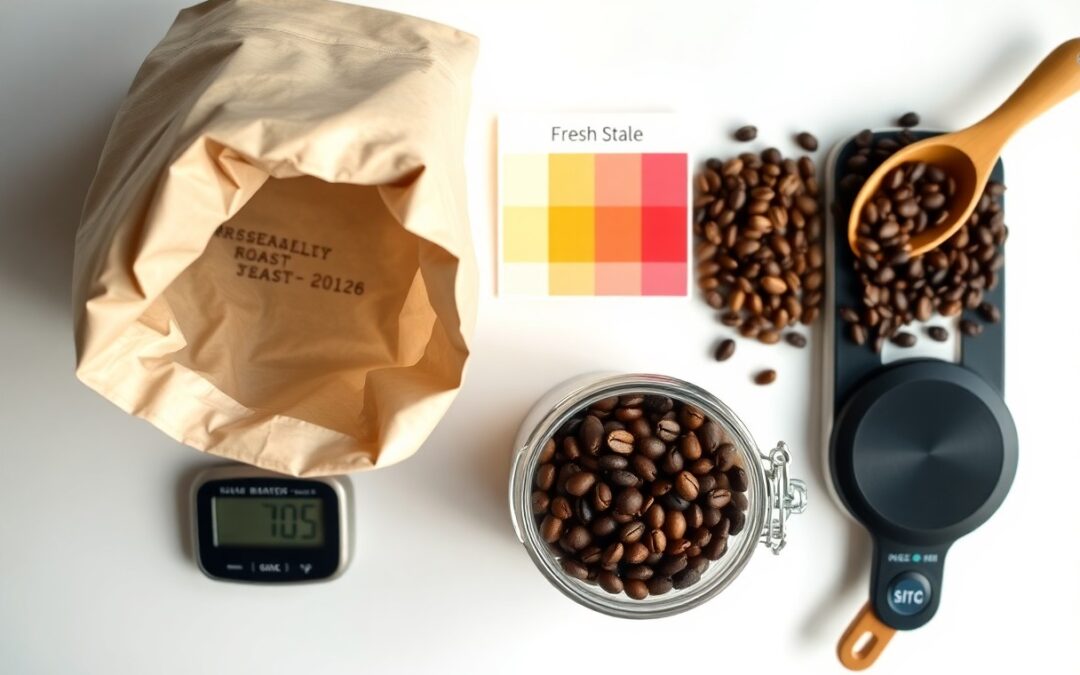
Just inspect aroma, appearance, and roast date to judge bean freshness; you should sniff for a bright, fragrant scent, check for glossy oils or dullness, and grind a small sample to verify lively aroma before brewing.
Key Takeaways:
- Flavor peaks 2-14 days after roast depending on bean and roast level; best drinking window is typically within 2-4 weeks of the roast date.
- Aroma and taste reveal freshness: fresh beans have a bright, complex aroma and lively cup; stale beans smell flat, lose sweetness, and brew dull or rancid.
- Store whole beans in an airtight, opaque container in a cool, dark place and grind just before brewing; freeze only for long-term storage in single-use portions to avoid repeated thaw cycles.
Key Factors Influencing Coffee Bean Longevity
Storage determines how long your beans stay flavorful; you should watch roast date, packaging, and environment to preserve oils and aromas.
- Roast date – fresher beans retain more aroma and acidity.
- Packaging – one-way valves and airtight containers slow staling.
- Grind size and exposure – ground coffee loses quality far faster than whole beans.
- Any damaged packaging or prolonged exposure to air, light, heat, or moisture accelerates staling.
Impact of Oxygen and Oxidation
Oxygen interacts with the oils and volatile compounds in your beans, causing staling; you will notice duller aromas and flatter taste as oxidation progresses.
Effects of Light, Heat, and Moisture
Light exposure breaks down delicate flavor compounds, and you will lose brightness quickly if beans sit in direct sun or clear packaging.
Moisture and heat speed chemical changes and can encourage mold in severe cases, so you should store beans in a cool, dry place away from temperature swings.
How to Read Labels for Peak Freshness
Understanding the Importance of Roast Dates
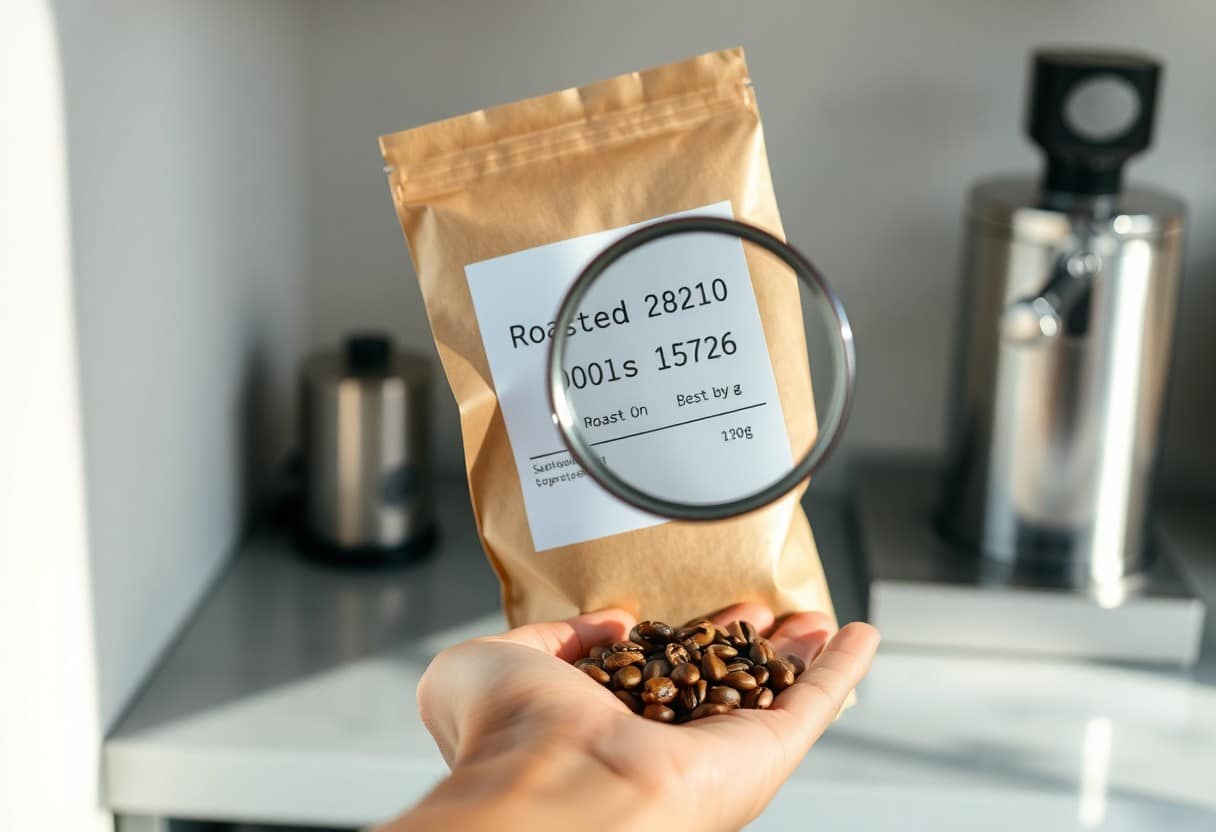
Roast dates tell you when beans left heat and are the most reliable freshness indicator on a bag. You can expect peak aromatics and clarity in the weeks after roasting, so prioritize bags with recent roast dates over vague best-by stickers.
You should aim to brew single-origin or light roasts about 4-14 days after roast for optimal degassing and flavor development, while darker roasts peak sooner. Storing beans sealed and cool extends that window.
Differentiating Between Best-By and Roasted-On Dates
Labels often show “best-by” dates that indicate quality shelf life rather than roast timing. You should treat best-by as a guideline and prefer roasted-on dates to assess actual freshness.
If a bag only lists a best-by date, you have less certainty about when beans were roasted. You might choose smaller bags or contact the roaster for roasted-on information before buying.
Check for a full roasted-on date (day, month, year) and prioritize roasters who publish it; this helps you plan purchases and avoid stale stock. You can also favor whole beans and airtight packaging when roast dates are absent.
Sensory Methods to Test Your Beans
You should rely on smell and appearance first: bright, complex aromas and even coloration usually point to usable beans, while musty or cardboard notes signal decline.
Use quick brewing or a small grind test to confirm: if the cup lacks acidity, sweetness, or body, the beans have likely lost desirable compounds and won’t taste as intended.
Performing the Ziploc Bag Gas Test
Place a small handful of whole beans into a clean Ziploc bag, expel most air, and seal it; fresh beans will release CO2 and may puff the bag within hours to a day.
Seal the bag and check after 12-24 hours; if the bag shows no expansion and the aroma is flat, you can infer low degassing and diminished freshness, though recent roast timing can affect results.
Evaluating Aroma and Surface Oil Consistency
Smell both whole beans and freshly ground coffee: lively, layered aromas indicate retained volatile oils and freshness, while dull or rancid scents reveal oxidation.
Check surface oils by examining the roast level: a slight sheen on dark roasts is normal, but excessively oily, sticky beans often point to older beans or prolonged exposure to heat and light.
Observe aroma intensity by grinding a small sample and sniffing immediately, then brew a tiny shot; if aroma dissipates quickly or smells off, the beans have likely degraded and won’t recover in brewing.
Expert Tips for Proper Coffee Storage
Store whole beans in opaque, airtight containers kept away from heat sources; airtight lids and small-batch storage reduce oxygen exposure and slow flavor loss while you use the beans within two to four weeks for peak freshness.
Keep beans dry and cool by avoiding the fridge or freezer unless you seal portions for long-term storage; avoid frequent temperature shifts and open containers that accelerate staling.
- Use small, opaque airtight canisters
- Release excess air with one-way valves
- Store in a cool, dark cupboard away from the stove
- Buy amounts you’ll use within two weeks
Selecting the Right Airtight Containers
Choose containers made of ceramic, stainless steel, or dark glass with tight-sealing lids so you control oxygen and light exposure; avoid thin plastic that can leach odors and degrade flavor over time.
Finding the Ideal Environment in Your Kitchen
Place your storage container in a cool, shaded cabinet away from the oven, sink, and windows to minimize heat, humidity, and light that speed staling; consistent conditions keep beans tasting fresher longer.
The best spot for your beans is a high, interior cupboard that stays near room temperature and out of direct sunlight, letting you preserve aroma while keeping them accessible for daily use.
How to Identify Stale Coffee During Brewing
During brewing, pay attention to aroma strength and extraction behavior; stale beans often produce weak, muted scents and a thin, lifeless cup even with correct grind and ratio. You can use consistent technique to isolate bean freshness as the variable when flavor falls flat.
Look for sluggish extraction and uneven flow through your bed of grounds-slow, clumpy drainage or rapid channeling both signal problems that often stem from stale or unevenly aged beans rather than equipment alone.
Observing the Presence or Absence of Bloom
When you pour the first water, watch for a lively bloom: rapid bubbling and visible expansion of the grounds indicate active CO2 release and recent roasting. Lack of bloom suggests the beans have degassed and lost freshness.
If bloom is faint or absent, adjust your expectations: older beans will still brew but will lack brightness and complexity, so you should rely more on grind and brew adjustments to coax the best possible cup.
Recognizing Flat or Rancid Flavor Profiles
You will notice flat beans produce muted acidity, dull sweetness, and an overall one-dimensional palate that lacks the push and clarity of fresh coffee. That flatness is a key sign of age.
Taste for oily or cardboard-like rancidity on the finish; such off-notes often stem from oxidation of oils and signal that the beans are past their prime rather than simply mis-extracted.
Smell the brewed cup as you sip-if the aroma or aftertaste leans stale, papery, or chemically, discard the batch and test a fresher bag to confirm the difference.

Bean Freshness Explained – How To Tell If Your Coffee Beans Are Still Good
Try treating older beans as ingredients rather than waste: grind them coarse for long cold-steeps, infuse them into simple syrups, or fold them into baked goods for a toasty note. For community observations on detectable changes see Are there any noticeable signs that the coffee beans were …
Experiment by portioning aged beans for single recipes or household uses so you can test what works without committing your whole batch.
Utilizing Stale Beans for Cold Brew Extraction
Cold brewing with older beans mutes flat or oxidized notes, so you can extract a smooth, low-acidity concentrate by using a slightly higher dose and a longer steep (18-24 hours), then dilute to taste.
Creative Non-Brewing Uses for Aged Coffee
Use aged beans and grounds as flavoring and household helpers: toast and grind them into spice rubs, add to chocolate batters, or let dry grounds absorb odors in drains and bins.
Mix spent grounds with equal parts coconut oil and sugar to make an exfoliating scrub you store in an airtight jar; you can also combine grounds with vinegar for a natural cleaning paste.
Conclusion
You can assess bean freshness by checking aroma, surface oils, roast date, and CO2 release. Fresh beans smell vibrant, show slight surface oils on darker roasts, and yield bright crema and flavor; stale beans smell flat, taste muted, or display off-odors. Store beans airtight, cool, and away from light to preserve peak quality.
FAQ
Q: What immediate signs show coffee beans are fresh?
A: Strong, complex aroma when you open the bag indicates freshness; bright floral, fruity, or chocolate notes are common in fresh specialty beans. Visible CO2 release inside a one-way valve bag or a noticeable “bloom” during the first pour of brewing signals recent roasting. Pack date on the bag and intact packaging with a one-way valve are reliable objective indicators of freshness.
Q: How long do coffee beans stay fresh after roast?
A: Peak flavor for most specialty whole beans typically occurs between about 3 days and 3 weeks after roast, depending on roast level and bean origin. Whole beans stored properly will maintain usable flavor for several weeks to a couple of months, while ground coffee loses aroma and flavor much faster, often within minutes to hours of grinding. Very dark roasts show faster sensory decline because oils on the surface accelerate oxidation.
Q: Do whole beans stay fresher than pre-ground coffee?
A: Whole beans retain volatile aromatics far longer because they expose less surface area to oxygen. Grinding dramatically increases oxidation and causes rapid loss of aroma and flavor, so grinding immediately before brewing preserves freshness. Espresso shops and home enthusiasts grind per shot or per brew for this reason.
Q: Can I tell freshness by how the beans look?
A: Oily sheen on beans usually reflects a darker roast and not necessarily staleness; recently roasted dark beans often look glossy. Dull, dusty beans with a powdery residue, visible mold, or an off color suggest poor storage or spoilage. Broken, infested, or wet beans indicate contamination and should be discarded.
Q: What storage methods keep beans fresh the longest?
A: Store beans in an opaque, airtight container at room temperature away from direct sunlight, heat, and moisture to slow oxidation. Avoid keeping beans in the refrigerator because temperature swings introduce moisture and odors; short-term freezing in sealed portions can work for long-term storage if you thaw sealed portions before opening. Buy only the amount you’ll use within a few weeks to maintain peak flavor.
Q: How can I test beans at home to judge freshness?
A: Smell whole beans first; a weak or cardboard-like aroma suggests staleness, while a lively, layered scent indicates freshness. Grind a small amount and smell the grounds, then brew a small cup: fresh beans produce a pronounced bloom, clear acidity or sweetness, and distinct aromatics. Stale beans taste flat or overly bitter, with muted aromatics and little aftertaste.
Q: Can stale coffee beans be revived or reused?
A: Re-roasting stale beans can alter and mask staleness but will not restore original aroma complexity and often produces a harsher profile. Using stale beans in darker-brew methods like French press or cold brew can hide some defects, but beans that smell rancid, musty, or moldy should be discarded for safety and taste reasons. Turning slightly stale beans into cold brew or espresso blends for blending with fresher beans are practical ways to use them.