

Most coffee flavor and aroma depend on bean freshness, so you should use recently roasted beans, store them airtight away from light, and grind just before brewing to preserve volatile oils and nuanced tasting notes.

Key Takeaways:
- Freshly roasted beans release volatile aromatics that peak within 7-14 days, yielding brighter acidity and more pronounced floral and fruity notes than older beans.
- Degassing and oxidation reduce flavor complexity over time, with oxygen-exposed beans developing stale, flat, and cardboard-like flavors after several weeks.
- Grinding just before brewing and storing beans in an opaque, airtight container away from heat and moisture preserves aroma and extends drinkable freshness.
The Chemistry of the Roast: Post-Heat Transformation
Roast chemistry continues after beans leave the roaster, and you witness Maillard and caramelization byproducts settling into stable aroma precursors.
Cooling slows thermal reactions so you can evaluate how acidity, sweetness, and volatile profiles will mature during storage.
Carbon Dioxide Release and the Degassing Phase
CO2 escapes rapidly from cell structure, and you notice it influences crema, extraction and perceived freshness when you grind and brew.
Timing of brewing matters because you must balance degassing to avoid under-extraction from trapped gas while retaining the aromatics you want in cup.
Development of Essential Oils and Lipids
Oils and lipids form complex matrices that carry aroma; you detect their contribution as mouthfeel and scent persistence during tasting.
Emulsification during extraction releases these lipids into the brew, so you should adjust grind and pressure to manage body and clarity.
Aroma interactions between oxidized lipids and volatile compounds change over days, so you’ll track those shifts to determine optimal roast-to-cup timing.
Understanding the Peak Flavor Window
Beans release CO2 and volatile aromatics at different rates after roasting, so you should expect a shifting flavor profile as gases escape and oils settle. You can taste sharper acidity early and fuller sweetness and body later; brewing during that window highlights the roast’s intended character.
Timing varies by origin and roast degree, so you should track aroma and extraction over multiple days to find consistency. Your palate and brew metrics will tell you when the cup reliably represents the beans.
Identifying the Sweet Spot for Different Roast Profiles
Different roast profiles hit their peaks at different times: light roasts often reveal floral and citrus notes later, while darker roasts show chocolate and caramel notes sooner. You can map these shifts by smelling and cupping over several days.
Experimentation with grind, dose, and brew method lets you pinpoint when each profile gives the most balanced extraction. You should keep concise tasting notes to reproduce peak cups reliably.
Why Immediate Consumption Can Be Counterproductive
Early consumption frequently yields underdeveloped aromatics and inconsistent extraction because trapped CO2 repels water; you may get hollow acidity and muted sweetness. You should avoid dialing in recipes on beans that are still volatile.
If you brew right away, volatile oils may produce off-notes and erratic crema, making shot-to-shot comparison meaningless. You should wait for the bean’s chemistry to stabilize before finalizing brew parameters.
Allowing a short rest-commonly 24-72 hours for many origins-lets CO2 dissipate and soluble compounds equilibrate, so you can fine-tune grind and extraction for predictable results; you should monitor aroma intensity and shot consistency to determine the best timing for your setup.
Factors Accelerating Bean Degradation
Exposure to oxygen, residual oils, and handling speeds staling, and you will notice brighter notes fade while mouthfeel thins.
- Using low-barrier bags lets oxygen in, so you lose aromatics faster than expected.
- Grinding increases surface area, making you accelerate volatile loss every time you prep grounds.
- Frequent temperature swings force you to replace beans sooner by breaking down fragile compounds.
After you expose beans to air, light, or humidity, fragile aldehydes and esters dissipate within days and the cup becomes noticeably flatter.
Oxidation and the Loss of Volatile Aromatics
Oxidation strips delicate volatile aromatics from roasted beans, so you will detect diminished floral and fruity notes; you can slow this by reducing headspace and using one-way valves.
The Impact of UV Light, Heat, and Moisture
Sunlight and elevated temperatures speed chemical reactions that break down oils and aromatics, and you experience rancidity and muted complexity when beans sit in warm, bright spots.
Moisture promotes hydrolysis and microbial activity, so you risk sour or flat off-notes; you should store beans dry in airtight, opaque containers at stable, cool temperatures.
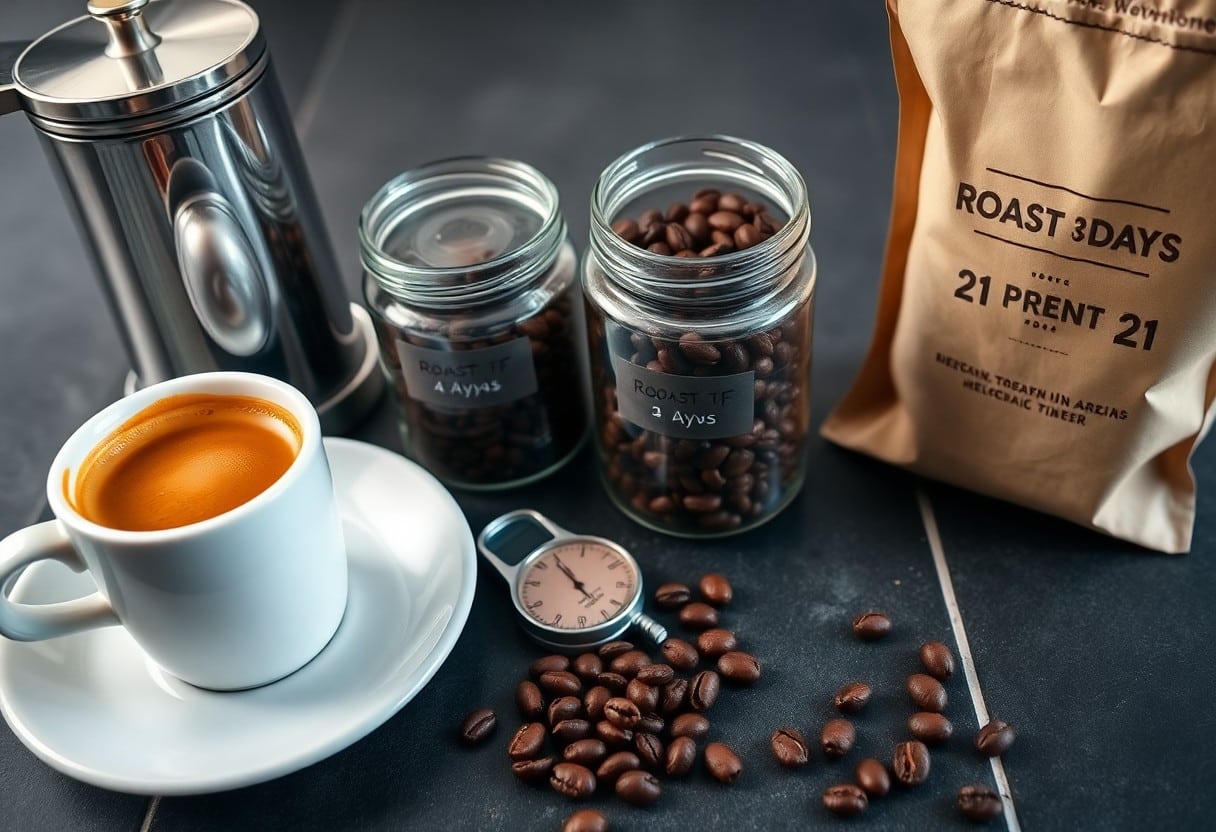
The Link Between Freshness and Extraction
Extraction affects how compounds dissolve: when you use very fresh beans, degassing changes solubility and you may under- or over-extract unless you adjust grind, dose, and time; see Is using very fresh coffee (say a couple hours after roasting … for community experiences and quick tests.
How Gas Content Affects Water Permeability
Porosity in the puck changes as beans degas, so you will notice channeling or uneven flow if trapped CO2 repels water; adjust tamp pressure and grind distribution to restore even permeability and extraction balance.
Impact on Crema Formation and Body
Crema depends on dissolved gases and surfactant oils: with very fresh beans you might see thicker but unstable crema, and shifts in body as emulsification changes; you should tweak dose and extraction time to control texture.
Pressure during extraction interacts with gas release, so if you use gentler pre-infusion or slightly lower peak pressure you can stabilize crema and achieve a fuller, smoother body without driving excessive bitterness.
Best Practices for Preserving Bean Integrity
Store whole beans in small, opaque, airtight containers to minimize oxygen and light exposure; you should portion them into one- to two-week amounts so you brew from peak aroma and flavor.
Avoid grinding more than needed since you preserve volatile aromatics and maintain consistent extraction when you grind immediately before brewing.
Airtight Storage and One-Way Valve Technology
Vacuum-sealed bags with one-way valves allow trapped CO2 to escape without admitting oxygen, so you retain freshness while preventing staleness during short-term storage.
Choose bags or canisters with proven valve designs and keep them in a cool, dark spot away from heat and humidity to limit flavor degradation and cross-contamination.
The Science of Freezing and Long-Term Preservation
Freezing arrests oxidative and hydrolytic reactions, preserving many aroma compounds; you must package beans airtight and remove as much air as possible before freezing.
Ensure you split roasts into single-use portions so you avoid thawing and refreezing, which accelerates moisture loss and flavor decline.
Thawing inside sealed packaging at room temperature prevents condensation on bean surfaces; you should open bags only after beans fully acclimate and use them within days for best aroma retention.
Sensory Analysis: Freshness vs. Staling
Taste reveals brightness and complexity in fresh beans, so you can track acidity, mouthfeel, and volatile aromatics that fade as staling flattens the profile.
Aroma delivers immediate evidence of freshness when you pick up floral, fruity, or caramelized notes, while aged beans give muted, papery scents that signal loss.
Recognizing Bright Acidity and Complex Sugars
Look for clean, precise acidity that lifts the cup and lets you perceive layered sugars-from citrus zest to brown-sugar caramel-that create a lasting, balanced finish.
When you cup intentionally, you can separate sharp, lively acids from sweetness complexity by noting how acidity changes across the palate and how sugars sustain aftertaste.
Identifying Flatness and Rancid Notes in Aged Coffee
Sour or dull attributes often indicate staling, and you might perceive narrowed flavor range, thin body, and an absence of the nuanced highs present in fresh brews.
Stale beans can produce oily surfaces and rancid aromas, so you detect cardboard, wax, or paint-like flavors that linger and point to lipid oxidation.
Smell closely during evaluation and you can swirl and sniff to distinguish roast-driven smokiness from true rancidity, then cup against a fresh sample to pinpoint deficiencies.
Summing up
Taking this into account, you can detect how roast date and storage shape acidity, sweetness, and aromatics; fresher beans yield brighter, more complex cup profiles while stale beans present muted flavors and flat scents. You should prioritize roast-to-brew timing, proper airtight storage, and whole beans to preserve volatile oils that define aroma. Small adjustments in grind and extraction will help you consistently translate bean freshness into the cup.
FAQ
Q: What does “bean freshness” mean and why does it matter for flavor and aroma?
A: Bean freshness describes how recently coffee beans were roasted and how much volatile aroma compounds and dissolved gases remain. Freshly roasted beans contain higher levels of aromatic oils and CO2; those compounds change and dissipate over time, altering taste and scent. Roast date on the bag provides the most reliable indicator of freshness.
Q: How does the roast date influence the taste I get in the cup?
A: Roast date influences flavor because chemical reactions during and after roasting create and release volatile compounds that produce aroma and taste. In the first hours to days after roasting beans release CO2 and can taste uneven for espresso; that degassing phase affects extraction and crema. Many drinkers find a flavor peak for filter brews between day 3 and day 14; espresso often tastes best between day 7 and day 21, although roast style and origin shift that window.
Q: How long are beans considered “fresh” for brewing?
A: Beans remain usable for weeks but aromatic intensity declines steadily after roasting. Whole beans retain flavors longer than pre-ground coffee because grinding exposes more surface area to oxygen. After roughly two to three weeks specialty coffees often lose a noticeable portion of their volatile complexity, and after months both filter and espresso taste noticeably stale.
Q: Does grinding coffee affect freshness and how soon should I grind?
A: Grinding increases surface area and accelerates oxidation, causing rapid loss of aroma and flavor. Grind immediately before brewing to preserve volatile oils, especially for pour-over and espresso. Pre-ground coffee will taste flatter much faster than whole beans.
Q: What are the best storage practices to preserve bean freshness?
A: Store beans in an opaque, airtight container at room temperature away from direct sunlight and heat. Avoid storing daily-use beans in the refrigerator because moisture and external odors degrade flavor; freeze only when you must store beans for weeks or months, and portion them so you thaw a single dose once. Use opened bags within two to three weeks for peak aromatic quality.
Q: How does bean freshness affect crema, extraction, and cup balance?
A: Fresh beans contain more CO2, which supports crema formation on espresso and can change extraction behavior. Very fresh beans may yield bright, acidic shots and sometimes require a coarser grind or short rest to avoid excessive sourness. Stale beans produce thin crema and muted aromatics that grinding and dial adjustments cannot fully restore.
Q: What practical steps maximize flavor from freshly roasted beans?
A: Buy beans with a clear roast date and purchase in small batches that you can consume within a few weeks. Store whole beans properly and grind only what you need for each brew. For espresso, try resting beans three to seven days after roast and then adjust grind, dose, and yield as the beans age. Keep tasting notes and tweak brew parameters as aromatic compounds decline to maintain preferred balance.