
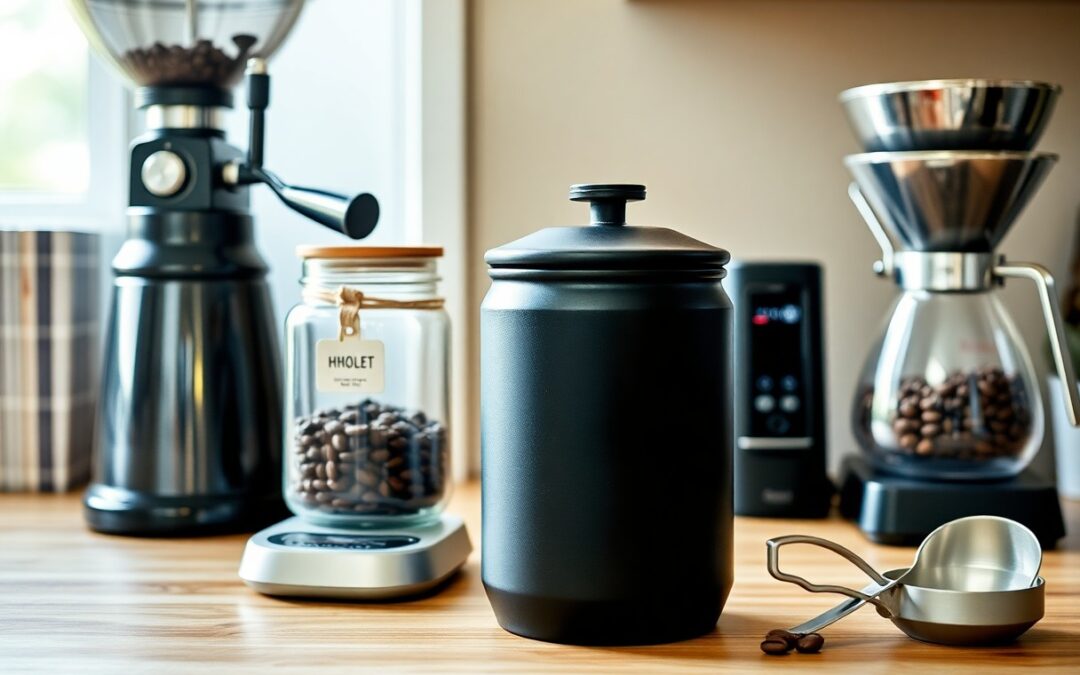
Coffee stays fresher when you buy whole beans, grind just before brewing, and store them in an opaque, airtight container away from heat and moisture; follow proper dosing and clean equipment to brew consistently better coffee.
Key Takeaways:
- Buy whole beans in small batches and store them in an opaque, airtight container away from heat, light, moisture, and strong odors to preserve aroma and flavor.
- Grind beans immediately before brewing with a burr grinder adjusted to the brew method for consistent particle size and even extraction.
- Control water temperature, brew time, and coffee-to-water ratio; use filtered water and a scale for repeatable, better-tasting results.
The Science of Staleness: Identifying the Enemies of Flavor
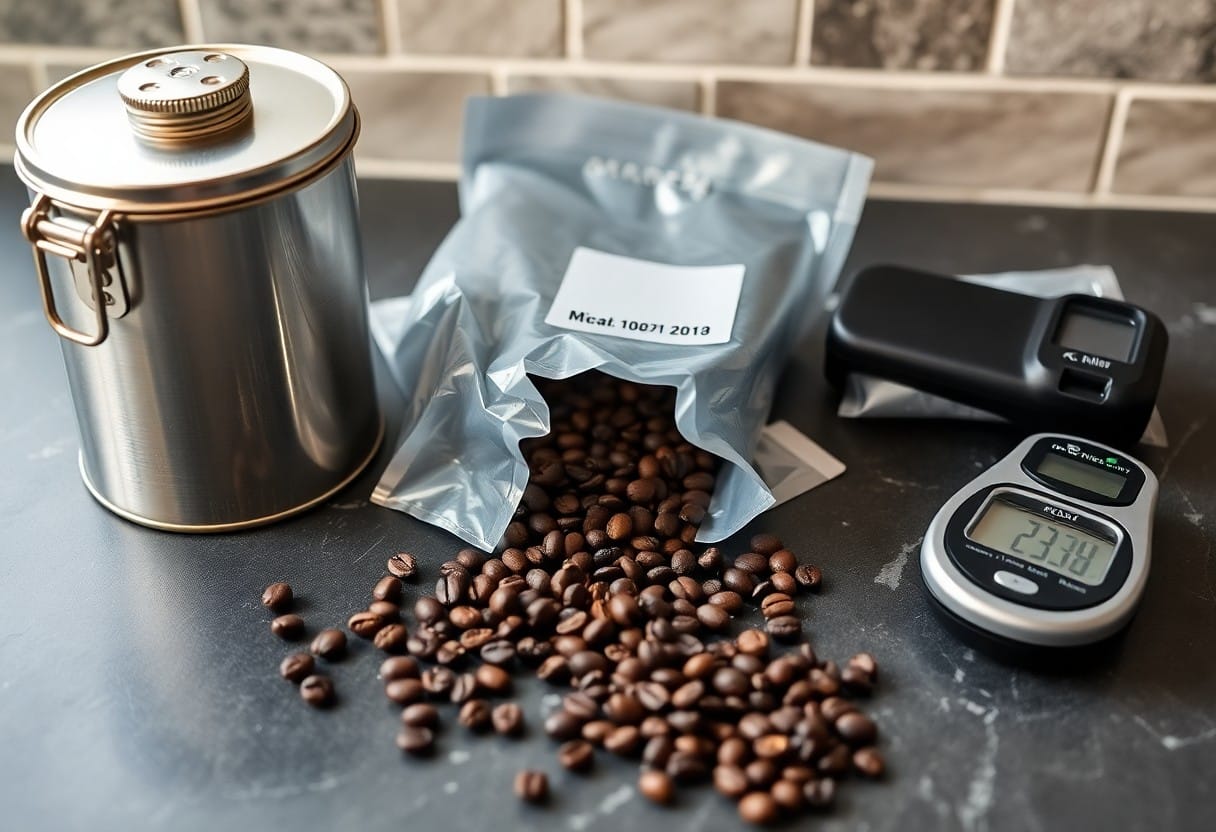
Oxygen is the primary driver of staleness; you lose volatile aromatics as beans oxidize, along with moisture and oils that carry flavor. You can see practical sealing steps in Here’s how to keep beans and ground coffee fresh for …
Enemies of Flavor
| Enemy | Effect on Flavor |
|---|---|
| Oxygen | Dulls aromatics and causes rancidity |
| Moisture | Promotes mold and mutes acidity |
| Light | Breaks down oils, fading aroma |
Mitigating the Impact of Oxygen and Oxidation
Store whole beans in airtight containers and remove excess air; you should buy smaller batches and minimize opening to slow oxidation and keep cups bright.
Controlling Temperature and Light Exposure
Avoid heat and direct sunlight by placing beans in a cool, dark cabinet away from ovens and windows, since temperature swings steal oils and aroma.
Choose opaque, insulated containers and maintain stable room temperatures; you should grind just before brewing so extraction matches the bean’s peak aroma.
Temperature & Light Tips
| Issue | Action |
|---|---|
| Direct sunlight | Use opaque storage away from windows |
| Heat sources | Keep beans away from ovens and appliances |
| Temperature swings | Store at steady room temperature, not fridge |
Optimal Storage Solutions for Longevity
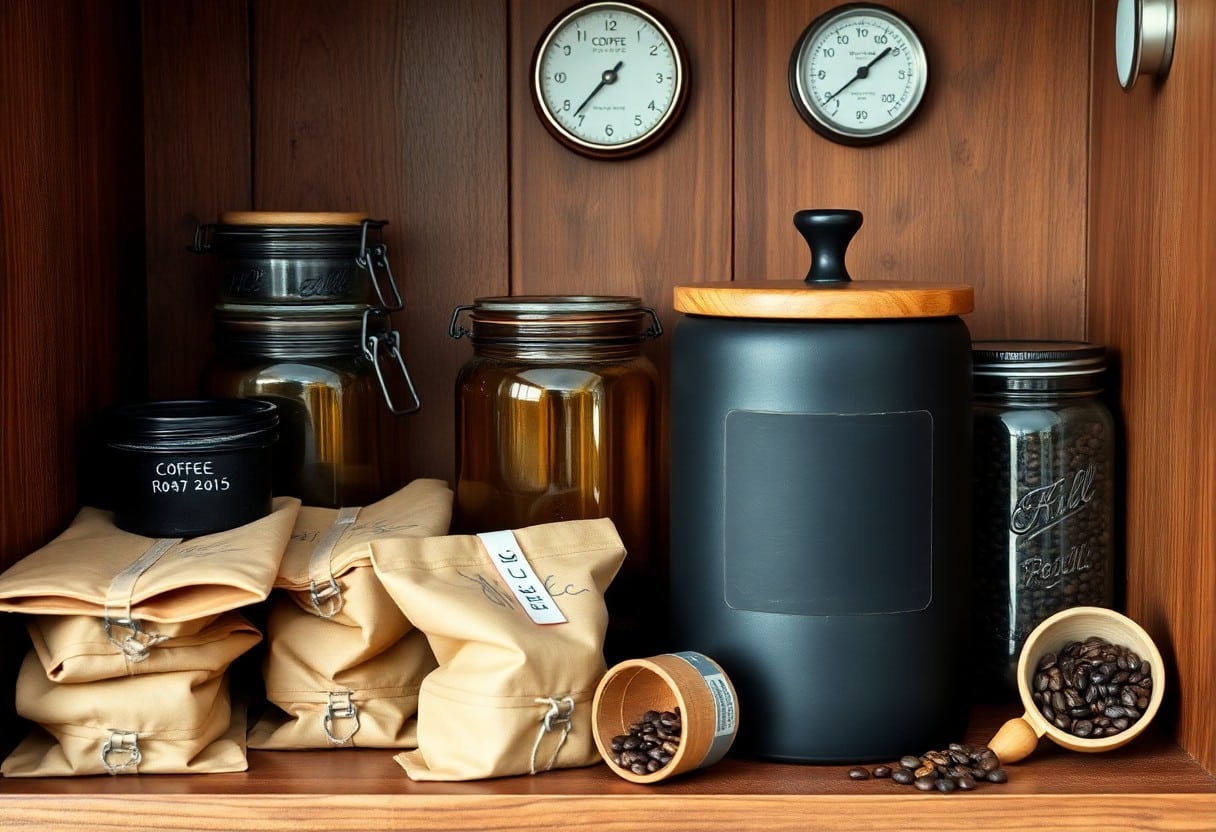
Store whole beans in a cool, dark spot away from direct sunlight and heat to slow oxidation and preserve aromatics. You should portion beans into small, sealed batches so you only expose a limited supply each time you brew.
Rotate your stock by using the oldest beans first and buying amounts that match your consumption to maintain peak flavor. You can label containers with roast dates to make rotation effortless.
Selecting Airtight and UV-Protected Containers
Use opaque, UV-blocking containers with airtight seals to protect beans from light and oxygen, which degrade oils and aromas. You should prefer stainless steel or ceramic options when possible to limit light exposure.
Select containers with minimal headspace and consider one-way degassing valves for very fresh roasts to prevent pressure build-up without letting air back in. You can keep unopened factory bags inside a sealed canister until you need them.
The Risks of Refrigeration and Condensation
Avoid refrigerating beans because temperature fluctuations and high humidity encourage condensation that harms flavor compounds and bean structure. You should never expose beans to repeated cold-to-warm cycles that cause moisture to form on their surface.
Condensation also transfers odors from other foods and can make beans taste flat or off, so keep beans away from humid areas and strongly scented items. You should always allow chilled containers to reach room temperature while sealed before opening.
If you must transport beans in cool conditions, keep them sealed and let them warm fully before opening to prevent moisture from forming; handling cold beans directly increases oil bloom and uneven extraction. You can sample a small brew first to check for any off-notes before committing to a full batch.
Sourcing and Selection Strategies
Quality sourcing means you focus on roasters who list origin, variety, and processing; when you choose beans with transparent info you can predict flavor and freshness more reliably. Buying from trusted roasters reduces unpleasant surprises and helps you match beans to your brewing method.
Local roasters often sell beans within days of roasting, so you can buy fresher and support shorter supply chains. If you want consistent results, prioritize roasters that roast to order and offer clear roast dates.
Decoding Roast Dates and One-Way Valve Packaging
Check the roast date, not just a “best by” stamp, since roasting starts the clock on flavor compounds and CO2 release; you should aim to brew most beans within a few weeks for peak sweetness and aroma. Lighter roasts often benefit from a short rest after degassing, while darker roasts are drinkable sooner.
Look for one-way valve bags that allow CO2 to escape without letting oxygen in, so your beans stay fresher longer after roasting. If you see no roast date or valve, plan to use those beans quickly to avoid flat flavors.
The Advantages of Small-Batch Purchases
Buy small batches that match how often you brew so you avoid stale inventory and experiment more frequently without waste. Small purchases let you dial in grind and brew parameters on a new coffee, then replicate the best result on future buys.
Smaller quantities also force you to adjust storage and consumption habits, helping you develop a system that keeps beans in peak condition between roast and cup.
Frequent small purchases mean you cycle beans before they lose vibrancy, and you can compare beans side-by-side to refine preferences and brewing technique.
Precision Grinding for Maximum Aromatic Retention
Grinding immediately before brewing locks in volatile aromatics by minimizing oxidation and evaporation, so you capture brighter, more nuanced flavors when the water hits the grounds.
Shorter intervals between milling and extraction preserve oils and subtle fruit notes, so you should grind only the dose you plan to brew within minutes for a livelier cup.
The Critical Importance of Grinding Just Before Brewing
When you grind immediately, fragile aromatic compounds remain intact and deliver clarity in the cup; delaying grinding accelerates staling and flattens acidity and aroma.
Achieving Uniformity with Burr Grinder Technology
Burr grinders produce consistent particle sizes that help you extract evenly, enabling you to avoid over‑extraction bitterness or underdeveloped, sour flavors across brew methods.
Consistency in grind distribution reduces channeling and yields repeatable shots, so you can fine‑tune grind size and dose with confidence during dial‑in routines.
Use low‑speed, timed grinding and routine burr cleaning to maintain uniform cuts and preserve volatile oils while you chase precise particle distribution for predictable results.
Water Quality and Extraction Variables
Water composition directly affects extraction and cup clarity, so you should monitor hardness and pH to tune body and brightness. Test samples or consult your local report, then adjust with filtration or mineral additions when brews taste thin or overly bitter.
Using Filtered Water to Enhance Flavor Profiles
Filtered water strips chlorine and off-notes so you can detect floral and fruit characteristics more clearly; you should select a filter that preserves moderate minerals. Aim for total dissolved solids around 75-150 ppm to balance sweetness and mouthfeel.
Calibrating Temperature for Balanced Acidity
Temperature changes alter extraction rate, so you can use hotter water to increase sweetness in light roasts and slightly cooler water to tame bitterness in dark roasts. Track small adjustments and pair them with grind changes for precise control.
Aim for ±2°C consistency and log each temperature change against roast and grind to refine a repeatable balance between acidity and body.
Temperature Calibration Quick Guide
| Parameter | Recommendation |
|---|---|
| Light roasts | 94-96°C to boost extraction and sweetness |
| Medium roasts | 92-95°C for balanced acidity and body |
| Dark roasts | 90-93°C to reduce harsh bitterness |
| When brew tastes sour | Increase temp 1-2°C or lengthen contact time |
| When brew tastes bitter | Lower temp 1-2°C or shorten extraction |
Maintaining Equipment for Pure Taste
Clean your grinder, brewer grouphead, and portafilter after each use to prevent stale oils from altering flavor and to keep your extractions consistent.
Schedule deep cleans and component checks monthly so seals, burrs, and water lines stay in spec and you avoid off-flavors from wear or mineral deposits.
Removing Residual Oils and Mineral Buildup
Use a dedicated coffee-group cleaner and a regular backflushing routine for espresso machines, and run hot-water cycles with citric acid or descaler to clear mineral buildup you might miss.
Avoid dish soap on flavor-contact parts; instead rinse thoroughly, perform blind extractions until clear, and monitor your water hardness to time descaling properly.
Consistent Measurement with Digital Scales
Weigh doses and yields in grams every brew, taring your equipment and tracking ratios so you reproduce the same extraction and troubleshoot variations quickly.
Calibrate scales against a known weight, keep them level, and replace batteries when readings drift so you maintain repeatable measurements and recipe fidelity.
Record each session’s dose, yield, and time in a simple log so you can spot trends, control variables like grind changes, and refine recipes with data rather than guesswork.
To wrap up
Summing up, you should store beans in small airtight containers kept cool and dark, buy whole beans and grind just before brewing, and control dose, water temperature, and brew time to extract consistent flavor. Clean grinders and brewers often and rotate stock to prevent staleness so your coffee tastes fresh every time.
FAQ
Q: How should I store whole coffee beans to preserve freshness?
A: Store whole beans in an airtight, opaque container kept in a cool, dry place away from direct sunlight and heat sources. Keep beans in small quantities for regular use to limit exposure to air each time you open the container. Use the roaster’s sealed bag with a one-way valve for short-term storage and transfer to a sealable container for daily access. Avoid storing beans near the stove, oven, or windows where temperature and humidity fluctuate.
Q: When is the best time to grind beans for optimal flavor?
A: Grind beans immediately before brewing to preserve volatile aromas and acids that dissipate once the cell structure is broken. Use a good-quality burr grinder for consistent particle size; consistency reduces uneven extraction and sour or bitter flavors. Match grind size to the brew method: coarse for French press, medium for drip, fine for espresso. Adjust grind in small steps when tuning extraction rather than changing dose or brew time dramatically.
Q: Can I freeze coffee beans to extend their shelf life?
A: Freeze beans only if you must store them longer than a few weeks and do so in an airtight, opaque container or vacuum-sealed bag to prevent moisture and freezer odors. Divide beans into single-use portions so you thaw only what you need; repeated thawing and refreezing damages flavor. Thaw sealed portions to room temperature before opening to avoid condensation on the beans, then use immediately after opening.
Q: How long do roasted beans stay at peak freshness?
A: Beans release CO2 after roasting and filter brewing often tastes best after the initial degassing period of 24-72 hours. For pour-over and drip methods many roasts are at a sweet spot between 3 and 14 days after roast; espresso often benefits from a slightly longer rest of about 7-21 days depending on roast and bean origin. Flavor begins to decline noticeably after two to four weeks, though proper storage can slow the process.
Q: What are precise dosing and ratio tips for consistent results?
A: Use a digital scale and a timer for repeatable brews. Common starting ratios are 1:15-1:17 coffee to water by weight for filter coffee; adjust within that range to taste. For espresso aim for a brew ratio (yield) around 1:2 (for example 18 g in to 36 g out) and adjust dose or grind to reach desired extraction and taste. Record dose, grind setting, water temperature, and brew time so you can reproduce or refine successful recipes.
Q: How does grinder care influence bean freshness and brew quality?
A: Clean grinder burrs and the dose chamber regularly to prevent old coffee oils and fines from affecting flavor and causing rancid or stale notes. Disassemble according to the manufacturer’s instructions and brush or vacuum grounds; avoid harsh detergents on burrs. Replace burrs when they become dull to maintain consistent particle size and avoid overheating beans during grinding.
Q: What brewing practices extract the best flavor from fresh beans?
A: Use freshly heated water between 92-96°C (197-205°F) and high-quality water with balanced mineral content for full extraction and clarity. For pour-over start with a 30-45 second bloom to release gases, then pour in controlled pulses to maintain an even extraction. Taste and adjust one variable at a time-grind size, dose, water temperature, or brew time-to correct sourness (coarser grind or higher temperature) or bitterness (finer grind or shorter contact time).