

guide: you weigh startup costs, location, menu scope and lifestyle to decide whether a mobile coffee van or a cozy café fits you; this guide clarifies funding, permits, equipment and customer experience so you can pick the profitable, practical option aligned with your goals.
Key Takeaways:
- Cost and startup risk: A mobile coffee van requires lower capital, faster break-even potential, and smaller fixed overheads; a cozy café demands higher rent, build-out and staffing costs but offers steadier daily revenue.
- Customer fit and location: A van works best at events, markets and office locations where mobility reaches customers on the move; a café benefits from foot traffic, repeat local customers and a sit-down experience that boosts average spend.
- Operations and lifestyle trade-offs: Van ownership involves driving, vehicle maintenance, a compact menu and weather-dependent sales; café ownership involves staff management, longer hours, greater inventory complexity and higher scalability for menu and seating.
Analyzing Location Strategy and Market Reach
Location analysis helps you compare a mobile route versus a fixed café by measuring daily foot traffic, event patterns, and transit nodes; use heatmaps and competitor presence to estimate reachable customers and peak sales windows for each model.
How to identify high-traffic zones for a mobile coffee unit
Spotting ideal zones requires you to map commuter corridors, office clusters, campuses, and event venues, then run short test shifts to collect sales-per-hour data; prioritize spots with predictable pedestrian flow and low direct vending competition.
Factors for selecting a sustainable neighborhood for a cozy café
Footfall trends, resident income, zoning, and evening activity help you assess whether a neighborhood can support a cozy café; weigh lease flexibility, parking, and nearby anchors that drive all-day traffic.
- Proximity to offices and residences to sustain morning and afternoon trade.
- Complementary businesses like bookstores or co-working spaces that increase cross-traffic.
- Visibility from main streets and easy access for walk-ins and deliveries.
- Thou should audit local foot traffic at multiple times before signing a long lease.
Community demographics and local development plans give you forward-looking signals about stability; monitor weekday versus weekend patterns, delivery demand, and turnover to model steady-state revenue before committing.
- Engage locals with soft openings and events to test product-market fit quickly.
- Track rent-to-revenue ratios and nearby competition to validate financial sustainability.
- Monitor transit projects and new developments that could shift customer flows.
- Thou must factor operating costs against projected steady-state sales before finalizing a location decision.
Navigating Regulatory and Licensing Requirements
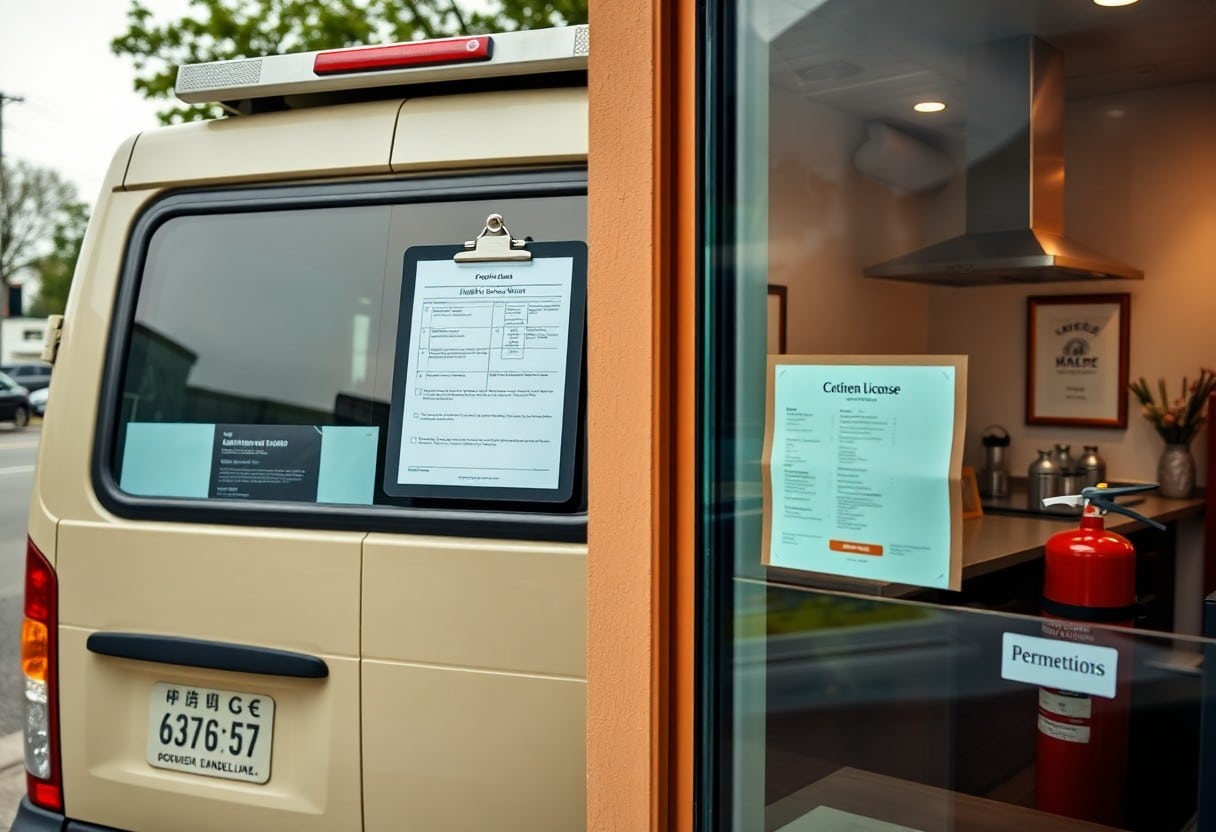
Local authorities set different permit paths for a mobile van versus a fixed café, so you should map required registrations, inspections, and insurance before committing to either model.
Fees and renewal cycles vary widely; you should budget for initial licensing, regular inspections, and possible upgrade costs if inspectors request equipment or layout changes.
How to secure health and safety permits for different models
You will need vehicle-specific sanitation checks and food-handler certifications for a van, while a café requires fixed-site kitchen approvals, ventilation checks, and grease-trap compliance.
Inspections typically cover water supply, waste disposal, and staff training records, so you should prepare clear documentation and schedule pre-inspection walkthroughs with your inspector.
- Apply online for food business registration and confirm which forms differ for mobile versus fixed premises.
- Gather your HACCP plan, staff certificates, equipment lists, and proof of insurance before booking an inspection.
- Any permits you submit should include accurate site maps, equipment specifications, and a designated contact for follow-ups.
Tips for complying with local zoning and parking ordinances
Check local zoning maps and speak with planning officers to identify allowed café locations and permitted parking or vending zones for a coffee van.
Engage with nearby businesses and property owners to secure private parking agreements and reduce complaints that could trigger enforcement actions.
Document permits, time limits, and signage rules, and keep printed copies and digital backups to present during patrols or audits to avoid citations.
- Confirm event permits and temporary-use permissions for busy areas and festivals.
- Verify meter rules, tow zones, and permit durations before setting up a regular spot.
- Any signage you use must comply with local size, placement, and content restrictions and be approved when required.
Evaluating Scalability and Growth Potential
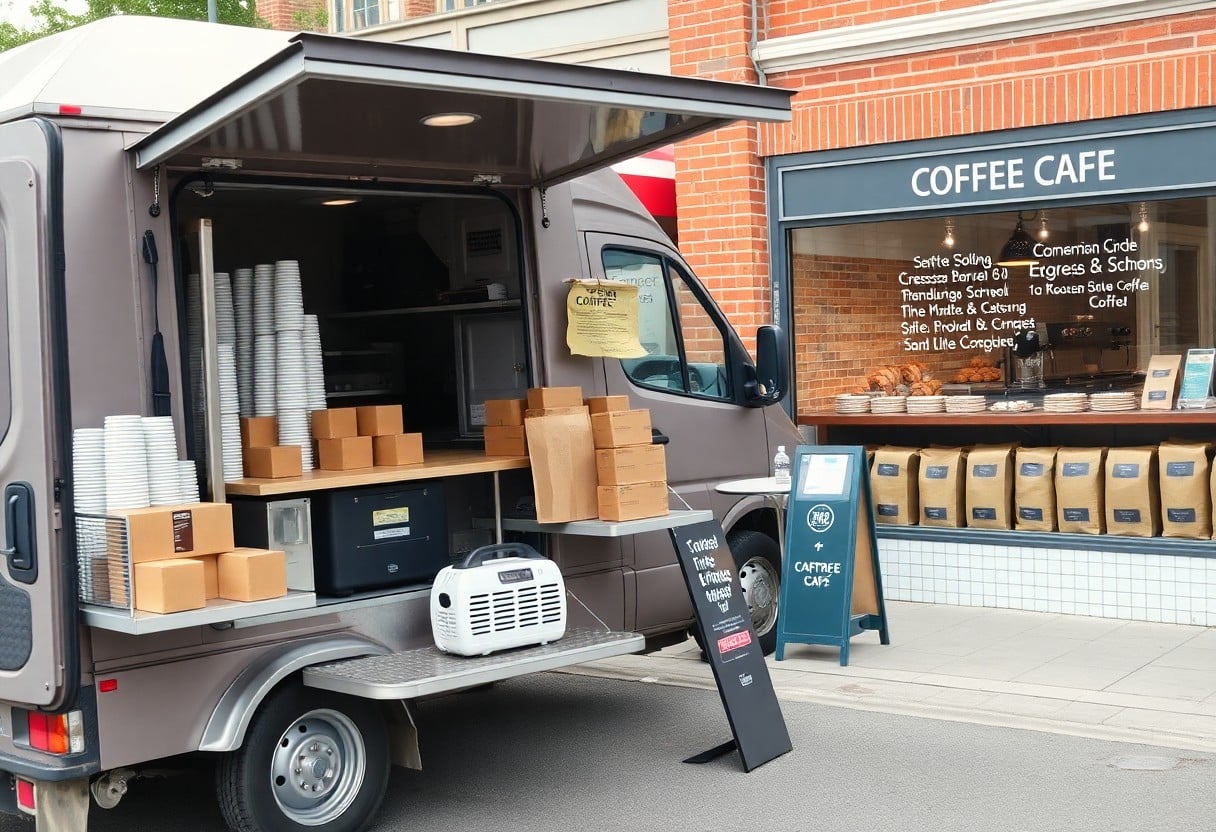
You should assess how each model scales: mobile units let you test routes and expand a fleet faster, while a cozy café builds stable daily revenue but needs bigger capital and staffing. Compare fixed costs, permit complexity and flexibility, and consult this Coffee Cart vs Coffee Truck: Which Is Best for Your Event? for event-focused scaling insights.
How to plan for fleet expansion or additional storefronts
Plan a phased rollout with clear KPIs, standardized menus, and documented training so you can replicate operations; secure financing per unit and pilot routes or neighborhoods before committing to multiple locations.
Factors determining long-term profitability and exit strategies
Market demand, margin stability, lease terms and recurring contracts determine lasting profitability; you must track per-unit EBITDA and build transferable processes to attract buyers.
- Consistent gross margins and predictable labor costs
- Recurring revenue streams or event contracts
- Documented operations and trained management
- Favorable lease or asset value
Consider starting exit planning early by documenting systems and grooming managers so your business sells cleanly. Assume that buyers reward predictable cash flow and a turnkey operation.
Summing up
To wrap up, choose a mobile coffee van if you want lower startup costs, flexible locations, and simple staffing; select a cozy café if you prioritize a fixed customer base, higher revenue potential, and a richer brand experience. Assess your budget, lifestyle, and long-term goals, calculate break-even timelines, and test demand with pop-ups or short leases before committing.
FAQ
Q: How do startup costs compare between a mobile coffee van and a cozy café?
A: A mobile coffee van generally requires lower upfront capital. Typical costs include vehicle purchase or conversion ($10,000-$70,000), espresso and brewing equipment ($5,000-$15,000), generator or electrical fit ($2,000-$8,000), permits and insurance ($1,000-$5,000), and initial inventory and branding ($1,000-$5,000). A cozy café usually needs higher capital for lease deposits, build-out and plumbing ($30,000-$200,000+), commercial equipment and ventilation ($20,000-$100,000), furniture and décor ($5,000-$30,000), and larger initial staff payroll and working capital. Ongoing fixed costs for a café such as rent, utilities, and payroll make the monthly burn higher than a van in most markets.
Q: What are the location and market implications of choosing a van versus a café?
A: A mobile coffee van offers flexibility to test multiple neighborhoods, events, and corporate sites and to follow high-traffic times without long-term leases. A cozy café provides a permanent address that builds foot-traffic predictability, repeat local customers, and a venue for community events. Customer acquisition for a van depends on route planning and event bookings, while a café relies on signage, local marketing, and a consistent in-store experience to attract passersby and regulars.
Q: What permits, health codes, and legal requirements differ between the two options?
A: A mobile coffee van typically needs a mobile vendor license, vehicle registration modifications, food-handling certifications, health department mobile unit approval, and sometimes access to a licensed commissary for daily cleaning and waste disposal. A café requires a business license, retail food establishment permit, commercial kitchen inspection, building and occupancy permits, fire and safety approvals, and ADA compliance. Timeframes and costs vary by jurisdiction; a van can face more frequent site-specific parking or event permits, while a café faces zoning and long-term lease legalities.
Q: How do menu choices and equipment constraints differ between a van and a café?
A: A van operates with limited space, water capacity, and power, which favors a focused menu of espresso-based drinks, filtered coffee, cold brew, and packaged pastries or a few grab-and-go items. Compact commercial machines, small grinders, and efficient storage solutions are typical. A café can house full-size espresso machines, multiple grinders, ovens, refrigeration, prep stations, and a broader food menu that includes hot food, sandwiches, and baked goods, increasing complexity but also average ticket size.
Q: What are the staffing and daily operational differences?
A: A mobile coffee van is often owner-operated or staffed by one to two people, requiring multitasking across brewing, order-taking, driving, setup, and breakdown; weather and events directly affect daily revenue. A café usually needs a staff roster with baristas, cooks or bakers if offering food, a manager, and cleaning staff, leading to higher payroll and scheduling complexity. Inventory ordering, supplier coordination, waste management, and consistent service training demand more formal processes in a café.
Q: Which model reaches profitability faster and which offers greater revenue potential?
A: A mobile coffee van can reach breakeven faster because of lower startup and fixed costs, with typical payback in 6-18 months depending on routes and events. Revenue per hour can be high at busy events but is variable. A cozy café can generate higher total monthly revenue through steady foot traffic, higher average tickets, catering, retail coffee sales, and events, but recovery of higher startup costs may take 18-36 months or longer. Profitability for either model depends on location, pricing, cost control, and consistent customer demand.
Q: How do scalability and exit strategies differ for a van versus a café?
A: Scaling with mobile vans can be faster and less capital-intensive by adding vehicles, hiring route managers, and selling catering packages; franchising a successful van concept is a common path. Scaling cafés requires finding suitable additional locations, significant capital for build-outs, and standardizing the guest experience across sites. Exiting a van business can be as simple as selling the vehicle and brand assets, while selling a café often involves lease transfer approval, valuing goodwill, inventory, and client base, and satisfying lender or franchisor conditions.