
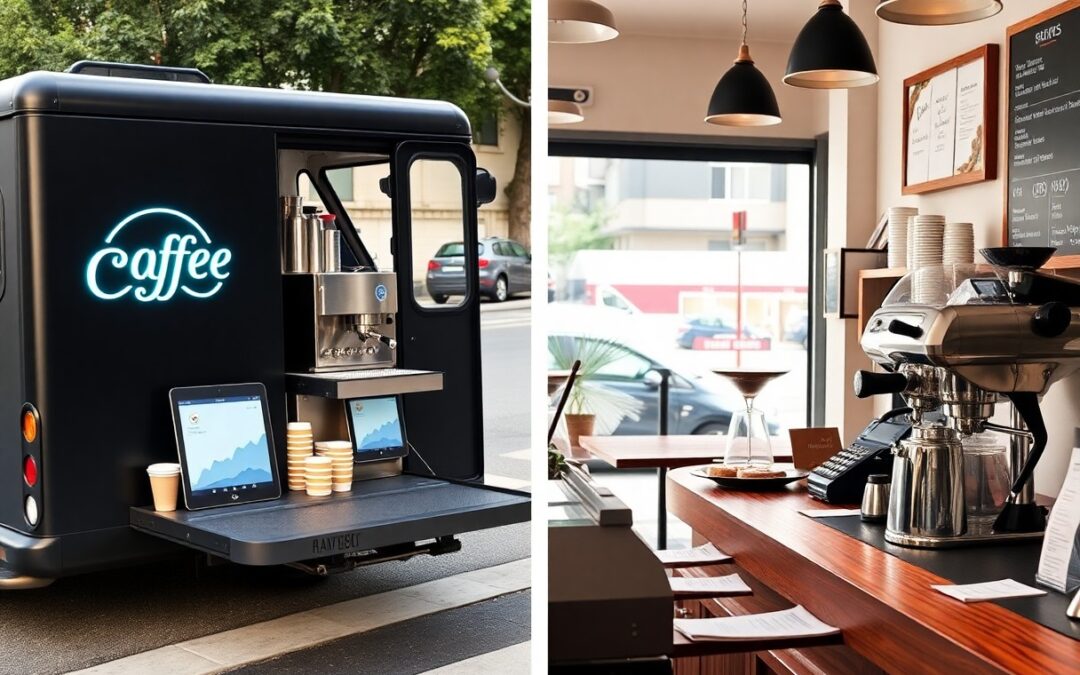
Coffee choices between a trendy coffee van and a classic café require you to weigh startup costs, location, margins and customer patterns; consult Which would be smarter, to open a cafe or a food truck? to refine profit-focused decisions.
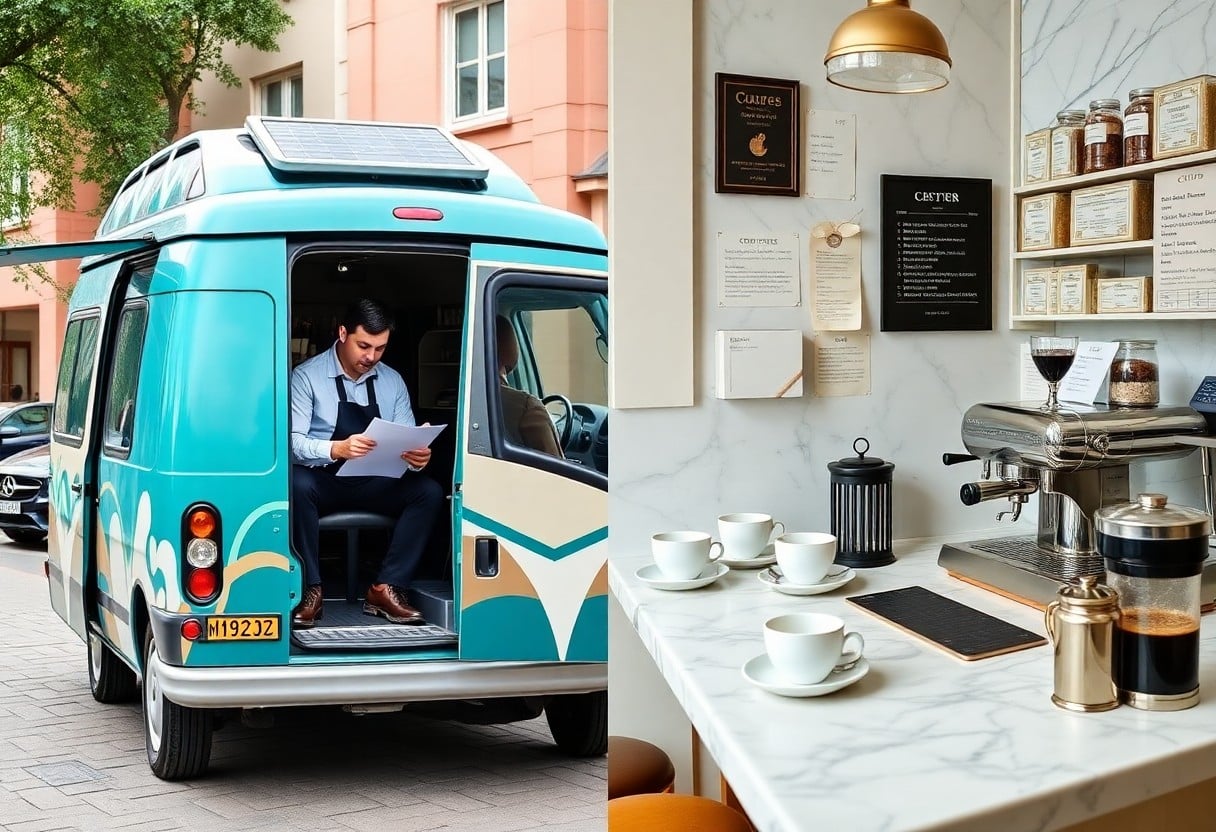
Key Takeaways:
- A coffee van has low startup and fixed costs with higher variable costs and location-dependent revenue swings; a classic café carries higher rent and staffing expenses but delivers larger average tickets and steadier daily income.
- Profit drivers differ: vans depend on event contracts, optimized routes, and a tight, high-margin menu to maximize per-shift revenue; cafés benefit from upsells, loyalty, breakfast/lunch dayparts, and extended hours to grow lifetime customer value.
- Choice depends on growth goals and risk tolerance: vans scale faster with lower capital needs, cafés build brand equity and predictable cash flow; consider a hybrid or pop-up testing strategy to capture both opportunities.
Identifying Key Financial and Operational Factors
Assess the cost behavior differences that drive profit decisions: variable supplies, fixed rent or parking, staffing hours, permitting, and equipment depreciation. Your sales velocity and customer turnover will alter how quickly investments pay back, so quantify projected daily tickets and average spend to build realistic forecasts.
- Startup capital and permits
- Rent, parking, or commissary fees
- Equipment and conversion costs
- Staffing, hours, and peak demand
- Supply chain and inventory turnover
Compare your cashflow timelines and margin expectations across both formats so you can prioritize investments that shorten break-even. Recognizing how small shifts in menu pricing or hours impact net profit will guide where to cut costs or expand capacity.
Calculating startup costs for mobile and fixed locations
Estimate one-time expenses for a van conversion versus a cafe fit-out, including vehicle purchase, kitchen build, permits, signage, and point-of-sale systems. You should also factor in initial inventory, staff training, and a modest marketing launch budget to attract first customers.
Include contingency and amortization assumptions so you can compare monthly equivalents rather than headline totals; this helps you see how a high upfront van conversion might compare to ongoing lease build-out payments. You will want to model financing costs if you plan to borrow.
Analyzing recurring overhead and utility expenses
Track ongoing utilities and operational fees: power for espresso machines, water, waste disposal, generator fuel for vans, and commissary charges for mobile operators. Insurance, licensing renewals, and POS subscriptions add predictable monthly lines that influence net margins.
Review payroll, payroll taxes, cleaning, and supply replenishment frequency since labor and disposables often dominate recurring costs. You should model labor hours against sales forecasts to see how staff scheduling changes affect per-cup profitability.
Optimize by benchmarking your utility usage and supplier rates against local competitors, and run monthly variance reports so you can renegotiate contracts or adjust hours quickly when costs creep up.
How-to Select a Location for Maximum Customer Reach
Location you pick determines customer density, operating costs, and daily windows you can target to convert foot traffic into reliable sales.
Assessing the benefits of high-traffic urban storefronts
Urban storefronts give you steady foot traffic, predictable peak hours, and strong cross-selling opportunities with commuters and nearby offices.
Leveraging mobility for event-based revenue streams
Events let you chase concentrated demand, capture premium pricing during busy shifts, and rapidly test new neighborhoods without long-term rent commitments.
Flexibility lets you book festivals and private bookings back-to-back, refine your event menu from immediate feedback, and grow repeat business through visible, memorable service.
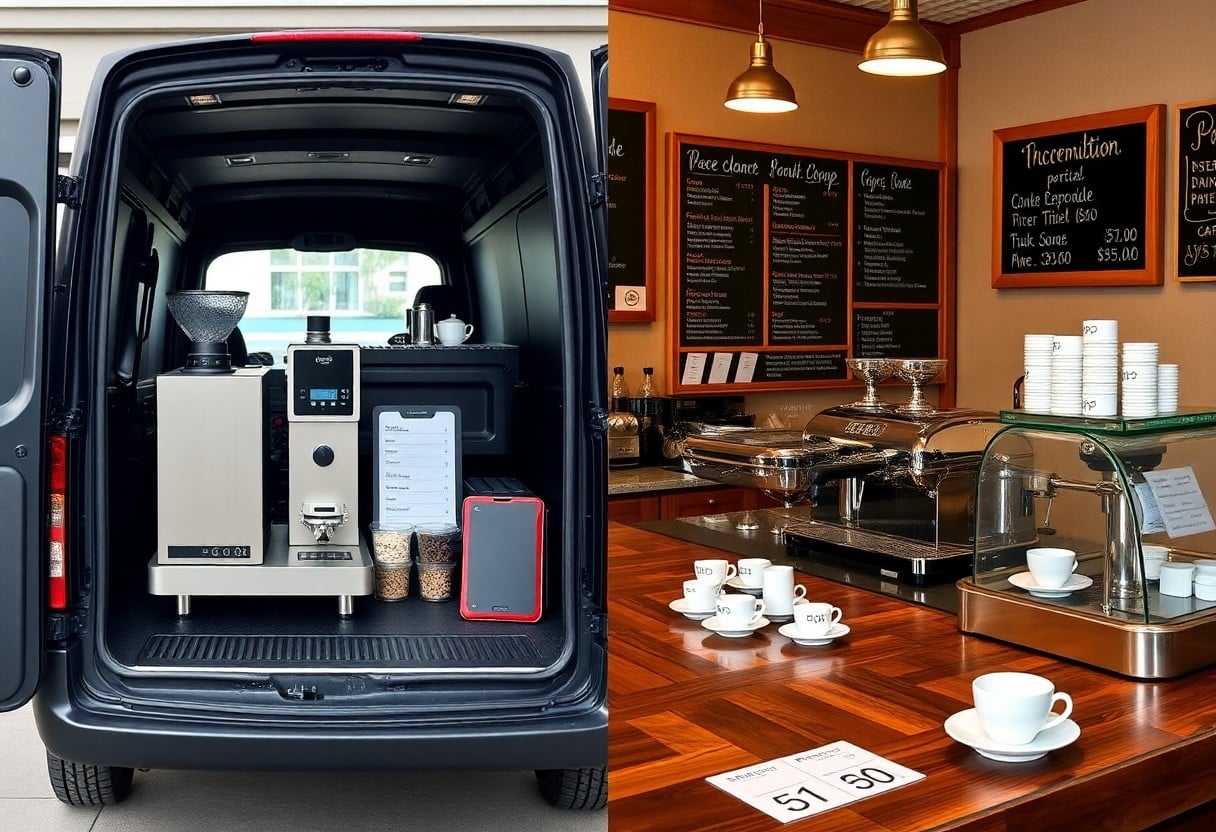
Expert Tips for Designing a High-Profit Menu
- Prioritize high-margin signature drinks that travel well.
- Offer compact food pairings to increase average spend.
- Use dynamic pricing for peak locations and events.
Focus on items that match your service model and cut dishes that slow your production or dilute your margins.
Streamlining offerings for rapid mobile service
Trim the menu to five-to-seven core beverages so you can prepare orders quickly, reduce inventory complexity, and keep the van moving during busy events.
Enhancing the customer experience through premium café seating
Consider durable, comfortable seating and clear sightlines that encourage your customers to stay longer and raise average checks while fitting your floorplan efficiently.
After you allocate space for a mix of two-top and communal tables, test which layouts increase dwell time and sales and add small comforts like task lighting and tray-friendly surfaces to justify premium pricing.
Managing Staffing and Workflow for Peak Efficiency
Staffing your team to match traffic patterns saves payroll and reduces queues; you should align shift overlaps with morning and lunch peaks, use short task lists, and monitor throughput to cut idle time without harming service.
Optimizing labor in a confined mobile environment
Optimize the van layout so you and your crew move in a tight circuit; batch prep, fixed stations, and compact equipment choices minimize steps. Cross-train staff so you can swap roles during rushes and keep a visible checklist to prevent errors.
Balancing service speed and quality in a traditional setting
Speed comes from scripted workflows and staged mise en place; you should standardize common orders, train baristas on timed pulls, and tune POS prompts to reduce decision time while protecting drink quality.
Quality checks such as quick tastings, recipe cards, and a simple recovery protocol let you maintain consistency; designate a shift lead to spot issues and reassign tasks so speed never compromises the customer experience.
Strategies for Scaling Your Coffee Business Long-Term
Scale operations by codifying procedures for purchasing, training, and inventory so you preserve margins as you grow. Use sales data to prioritize profitable locations and formats, and set short-term cash flow checkpoints that inform capital deployment.
Plan growth in phases: pilot new concepts, measure margins, then commit to replication when KPIs stabilize. Set hiring plans and financing triggers so you avoid overextending while expanding.
Expanding a fleet of trendy coffee vans
Target high-traffic events and corporate contracts that pay premium per-cup prices and offer predictable hours. You should schedule routes to minimize dead miles and maximize repeat stops.
Build standardized van templates with modular equipment and easy-to-repair components to cut downtime. Train mobile teams on quick service routines and preventive maintenance so customer experience stays consistent.
Developing a multi-location boutique café brand
Rotate staffing patterns and menu items to match local tastes while keeping your signature beverages unchanged. You must evaluate footfall, rent tiers, and nearby competition before signing long-term leases.
Design brand standards for interior, music, and tabletop service that you can replicate across sites. Centralize roasting and purchasing to secure pricing and quality control.
Standardize operations with a detailed manual, a training academy, and KPI dashboards so you scale culture and quality together. Pilot small improvements systemwide and use feedback loops to refine opening checklists and local marketing tactics.
Final Words
Upon reflecting on a trendy coffee van versus a classic café, you weigh mobility and low rent against steady foot traffic and higher average spend. You prioritize location testing, event bookings, tight menus, and efficient staffing to protect margins. You track cost per cup, customer frequency, and brand strength, then choose the model or hybrid that fits your capital and growth goals.
FAQ
Q: What are the main cost differences between a trendy coffee van and a classic café?
A: A coffee van typically requires lower startup capital: used van plus fit-out and equipment can range from $20,000 to $80,000, with permits, generator or power upgrades, and signage adding to costs. A classic café often needs $100,000 to $350,000 for lease deposits, build-out, plumbing, electrical, commercial kitchen equipment, furniture, and larger inventories. Monthly fixed costs differ: vans face fuel, maintenance, mobile permits, insurance, and variable event fees; cafés carry rent, utilities, staff wages for longer shifts, and higher utility bills. Cost of goods sold (COGS) per drink is similar for both formats, but labor and rent proportions shift overall margins: expect labor to be 25-35% of sales in cafés and 15-25% in well-staffed vans that run solo or with one partner.
Q: Which format reaches profitability faster?
A: A coffee van often reaches break-even sooner because of lower fixed overhead and the ability to target high-margin events or peak commuter times. A classic café can build steady, predictable revenue through repeat customers, higher average check sizes from food and seating time, and retail product sales, but payback periods are usually longer due to higher initial investment. Market factors such as local rent levels, event availability, and owner experience determine which model becomes profitable faster in a given area.
Q: How should location strategy differ between a van and a café?
A: Van operators should plan a location mix that includes morning commuter spots, lunch hubs, office parks, and booked events or festivals, using real-time social updates to drive traffic. Parking restrictions, permit windows, and competition at popular sites must be mapped and scheduled. Café owners should evaluate pedestrian counts, visibility, nearby anchors (offices, universities, retail), and lease terms; seating capacity and turnover rate directly affect revenue per square foot. Both models benefit from targeted market research and trial periods to validate site choices.
Q: What menu and pricing tactics maximize profit for each model?
A: Keep the van menu tight to speed service and reduce waste, focusing on 8-12 high-margin items, premium single-origin espresso for higher ticket items, and two or three grab-and-go food options with 50-70% gross margins. In a café, expand food offerings to capture breakfast and lunch trade, create combos that raise average check by 15-30%, and sell retail bags of beans or packaged goods to increase margin. Use price anchoring with a premium option, timed promotions during slow periods, and strict portioning and inventory control to keep COGS for beverages under 25% and food COGS under 30-35%.
Q: What operational challenges most affect profit and how can operators mitigate them?
A: Equipment failure, inconsistent staffing, supply shortages, and weather for outdoor vans are primary profit drains. Mitigation steps include scheduled preventive maintenance, cross-training staff to cover peaks, reliable supplier relationships with secondary sources, and portable shelter or contingency routes for bad weather. For cafés, control utilities and waste through energy-efficient equipment and strict waste-tracking; for vans, optimize routes to minimize fuel costs and downtime between locations. Strong POS reporting reduces shrinkage and improves decision-making.
Q: Which key performance indicators (KPIs) should owners track to compare profitability?
A: Track daily cups sold, average ticket value, gross margin per drink, COGS percentage, labor cost percentage, rent or vehicle loan as percentage of sales, and net profit margin. Calculate break-even cups per day and payback period on startup investment. Monitor peak-hour throughput and conversion rates at chosen locations. Use weekly and monthly variance reports to spot seasonality or location underperformance and reallocate resources accordingly.
Q: Can combining a coffee van and a café maximize overall profits, and what are the practical steps?
A: Combining both models creates multiple revenue streams: the café supplies a flagship presence and consistent income while the van captures events, catering, and off-site visibility. Practical steps include unified branding and menu consistency, shared inventory and bean roasting to reduce unit costs, a centralized scheduling and booking system for the van, and clear staffing plans that avoid double labor costs. Plan capital allocation for an initial pilot van, track cross-promotional lift from café customers, and outline SOPs so quality remains consistent across both formats.