
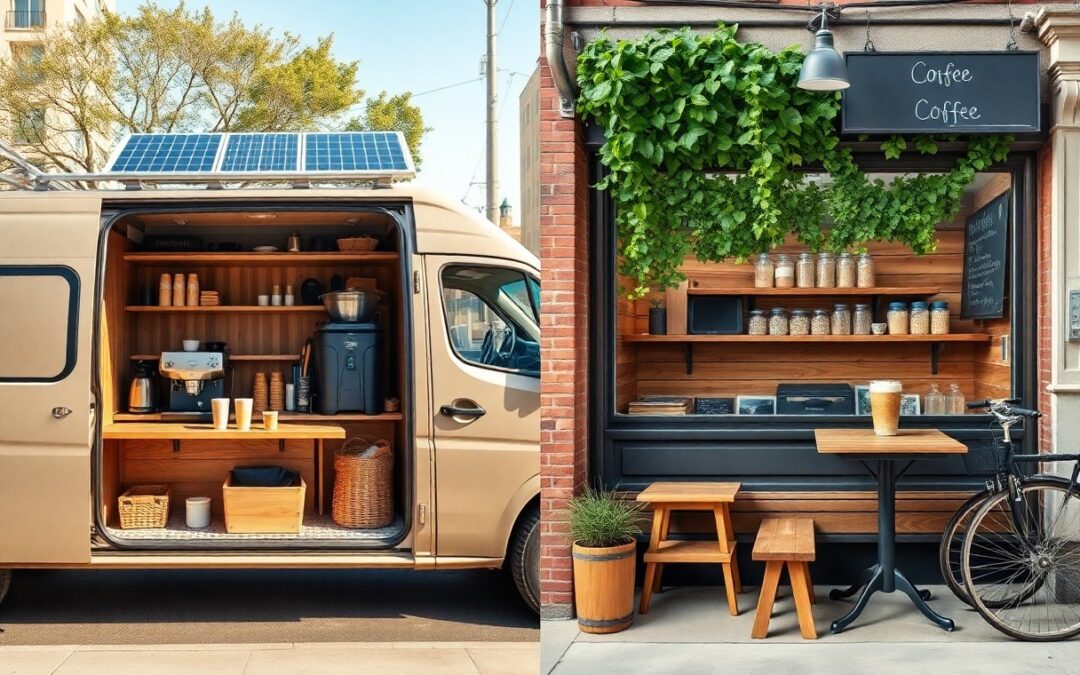
Just compare startup costs, energy use, waste systems, and sourcing when choosing between a sustainable coffee van and an eco-friendly café; you will assess customer reach, regulatory needs, and projected margins.
Key Takeaways:
- Sustainable coffee vans lower fixed costs and reach customers on the move; they require compact solar and battery setups, efficient water and waste management, and tight supply logistics to maintain quality and margins.
- Eco-friendly cafés enable larger-scale waste reduction, bulk sourcing, and renewable energy or heat-recovery installations that cut per-cup emissions, but they demand higher capital, steady utilities, and adherence to commercial health and waste regulations.
- Choice depends on business goals: a van suits mobility, lower startup cost, and fast market testing; a café supports community space, higher capacity, and deeper sustainability investments with more predictable local revenue.
Final Words
As a reminder you should weigh a coffee van’s mobility, lower overheads, and simpler sourcing against an eco-friendly café’s larger energy systems, seating, and broader menu. You can cut emissions by choosing electric or hybrid vehicles, energy-efficient appliances, compostable or reusable serviceware, and certified local beans. You should plan waste and water systems, track per-cup impacts, comply with regulations, and scale the model that matches your customer reach and operational capacity.
FAQ
Q: What are the main differences between building a sustainable coffee van and an eco-friendly café?
A: A coffee van offers mobility, lower upfront construction costs, and a smaller physical footprint, which makes it easier to test markets and reduce building-related emissions. A café provides higher customer capacity, more consistent hours, and stronger potential for a community hub and full-service offerings. Energy sourcing and waste systems differ: vans rely on compact, efficient appliances and off-grid power (solar, batteries, propane) while cafés can install larger-scale renewable systems, greywater solutions, and advanced waste sorting. Regulatory demands shift from mobile vending permits and parking rules for vans to building codes, HVAC, and occupancy permits for cafés. Profitability depends on volume, rent, and labor; vans can have lower fixed costs but limited throughput, cafés can scale menu complexity and ancillary revenue but face higher overhead.
Q: What permits, licenses, and site requirements should I plan for each model?
A: For a van expect vehicle registration, mobile food vendor or street trading license, local council parking permits, and food safety certification for staff. Health inspections, fire extinguisher requirements, and waste disposal agreements are common. For a café plan for business registration, food premises registration, building and occupancy permits, plumbing and electrical inspections, fire safety compliance, and accessibility rules. Both models require staff food-safety training, allergen labeling compliance, and local sales tax registration. Local zoning and event-specific permits can affect where a van can operate and what a café can serve.
Q: How can I minimize energy and water use in a van versus a café?
A: Vans benefit from high-efficiency espresso machines rated for low power draw, DC-compatible refrigerators, LED lighting, and roof-mounted solar paired with lithium batteries. Install on-demand water heaters and low-flow faucets to reduce usage. Cafés should prioritize heat-recovery systems, variable-speed HVAC, high-efficiency commercial equipment, LED fixtures, and submetering to track consumption. Both models should use filtered water systems to reduce waste, harvest rainwater where allowed for non-potable uses in cafés, and schedule maintenance to keep equipment operating efficiently.
Q: What waste-reduction and packaging strategies work best for each option?
A: Use compostable or reusable cups and encourage a reusable-cup discount in both models. Vans should select lightweight, certified-compostable disposables to minimize storage burden and work with local composting services. Cafés can invest in on-site composting or organics pickup, in-house dishwashing for reusable wares, bulk dispensers for condiments, and clear waste-stream signage. Source packaging that is recyclable in the local facility and track waste diversion rates monthly to identify problem items.
Q: How should ingredient sourcing and menu design differ to keep operations sustainable?
A: Prioritize direct-trade or certified-sustainable coffee and local, seasonal ingredients for both formats to reduce transport emissions. Vans should keep a compact menu focused on high-margin, easy-to-prepare items to limit storage and waste. Cafés can offer a broader menu with in-house baked goods and more complex recipes, but should plan batch sizes and cross-use ingredients to cut waste. Negotiate with regional suppliers for smaller, more frequent deliveries to vans and bulk deliveries to cafés with efficient storage.
Q: What are typical startup and operating cost differences, and what funding or incentive options are available?
A: Startup for a converted coffee van often ranges from modest costs for a used vehicle and retrofit to higher budgets for a custom build; typical early-stage costs include van purchase, equipment, permits, and branding. Café startups require leasehold improvements, commercial equipment, and higher initial inventory and staffing costs. Operating expenses for vans center on fuel/energy, maintenance, and event fees; café expenses include rent, utilities, and higher payroll. Seek green business grants, energy-efficiency rebates, low-interest small-business loans, crowdfunding, and partnerships with local suppliers to reduce capital needs. Track payback periods for sustainable investments like solar or efficient equipment when budgeting.
Q: How do I measure environmental impact and scale sustainability as the business grows?
A: Track key performance indicators such as energy use per cup, water per cup, waste diversion rate, percentage of sustainable-sourced ingredients, and carbon emissions from transport. Use simple spreadsheets or sustainability dashboards to collect monthly data. Pursue relevant certifications progressively (local green business programs, organic/coffee-specific certifications, or third-party sustainability audits) to validate claims. When scaling, standardize supplier agreements, replicate successful energy and waste systems, and maintain training programs so sustainability practices remain consistent across additional vans or café locations.