
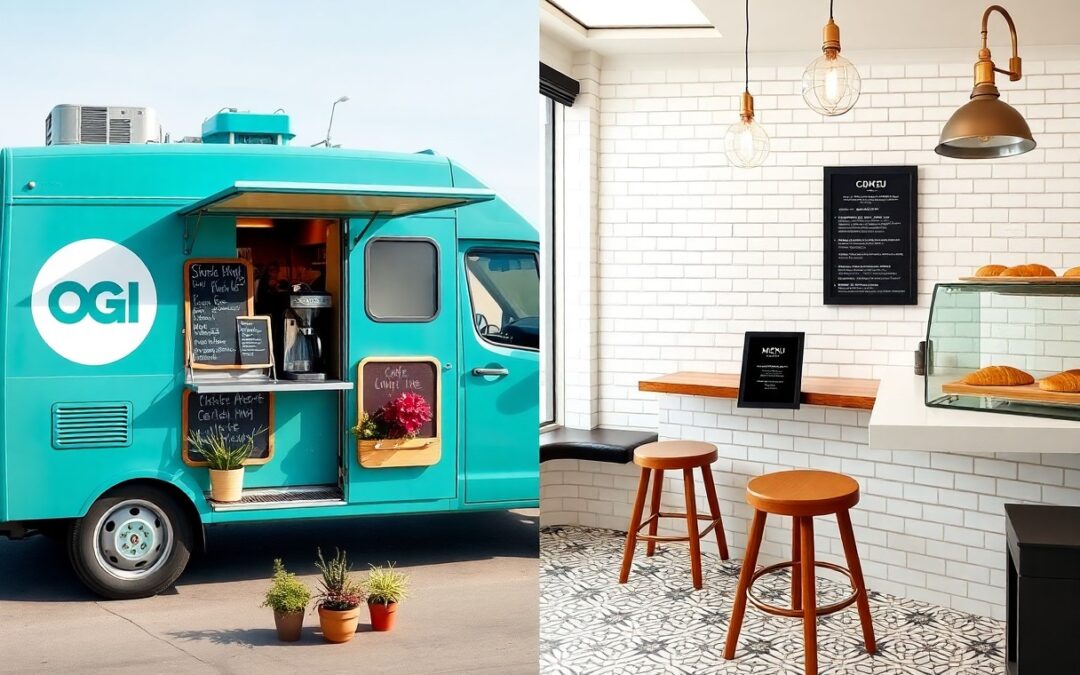
You will compare practical design choices for a compact, mobile coffee van and a cozy café space, focusing on branding, layout, materials, and customer experience to help you make confident, results-driven design decisions.
Key Takeaways:
- Visual branding: Coffee van requires bold, high-contrast graphics and large, legible signage for quick roadside recognition; café space supports softer brand cues-textured finishes, curated lighting, and displays that invite longer visits.
- Operational layout: Coffee van design prioritizes compact workflow, easily accessible equipment, and weatherproof finishes for fast service; café layout focuses on varied seating, acoustic zoning, and back-of-house storage to support higher dwell time.
- Customer experience: Coffee van sells speed and curb appeal-choose durable, easy-clean materials and concise menus; café sells comfort and discovery-use layered lighting, varied seating types, and sensory details like scent and texture.
Identifying Key Branding Factors for Mobile and Static Venues
Compare how you prioritize a coffee van’s curb appeal, concise menu and speedy service versus a café’s interior mood, seating and extended offerings.
- Make your exterior wrap and signage readable from distance so you capture drive-by attention.
- Keep menus concise for vans and broaden choices for cafés to match dwell time.
- Optimize packaging and labeling for takeaway visibility and hygiene.
- Design interior lighting, seating and scent to encourage lingering in a café.
- Standardize colors, tone and service cues so customers recognize you everywhere.
After you map visibility, traffic flow and spend per visit, use that data to weight investments between exterior branding, packaging and interior finishes.
Defining your visual signature and target demographic
Visuals shape immediate recognition, so you should choose a clear logo, a restrained color palette and typography that match your target customers, then apply them to wraps, cups and décor.
How-to align your brand message across different platforms
Know your single-line brand promise and use it as the anchor for staff scripts, social captions and menu descriptions so the tone stays consistent across van, café and online.
Craft reusable templates for posts, receipts and signage, and run short A/B tests on imagery and copy in both settings to learn which elements convert passersby into repeat customers.
Curating the Atmosphere of a Charming Café Space
Lighting sets the mood in your café; use warm bulbs, layered fixtures, and dimmers to create intimate pockets, and add plants and local art to soften edges – see 540 Coffee cart ideas for visual cues.
Seating choices shape customer behavior: mix banquettes, small tables, and bar stools so you can accommodate solo guests and groups while reinforcing your brand’s color story.
Essential tips for selecting furniture and tactile materials
Choose durable woods, soft upholstery, and textured ceramics that invite touch and age gracefully.
- Pick seat heights and depths that support varied body types you expect.
- Favor fabrics and finishes you can clean without losing character.
- Mix smooth and nubby textures so surfaces feel interesting to the hand.
- Opt for scales that allow clear sightlines for staff and customers.
After you test ergonomics and surface maintenance in situ, arrange pieces to support service efficiency and cozy sightlines.
How-to use spatial planning to enhance customer flow and comfort
Map the customer journey from door to counter, then allocate clear queuing lanes, accessible seating clusters, and transit paths so you can minimize bottlenecks while keeping sitting areas comfortable and visually connected to service points.
Technical Design Factors: Equipment and Utility Integration
You should match equipment size to your service model, balancing grinder capacity, boiler type, and refrigeration against available utilities while keeping maintenance access clear.
- Dedicated circuits and surge protection for espresso machines
- On-demand water heaters, accessible shutoffs, and clear drain routes
- Ventilation placement to control heat and condensation
Knowing your hourly water and electrical peaks lets you size tanks, heaters, and breakers so you avoid outages and simplify technician visits.
Space-saving tips for mobile espresso bar configurations
Arrange modular stations so you can fold or slide components to free counter space during slow periods and maintain service speed at peaks.
- Vertical storage for cups and beans
- Slide-out prep trays and collapsible tamping stations
- Under-counter bins and stacked grinders to reduce footprint
Perceiving traffic flow and peak tasks will help you place the group head, grinder, and POS within reach so you minimize steps and speed orders.
How-to optimize plumbing and electrical layouts in a permanent shop
Plan for separate circuits for boiler, grinder, and refrigeration, map plumbing runs so you can keep risers visible for servicing, and place shutoffs within easy reach for staff and technicians.
Ensure you perform load calculations, leave spare conduit for future equipment, label panels clearly, and position service access panels to reduce downtime during upgrades.

Maximizing Visibility and Foot Traffic via Smart Design
Design your van or café to catch eyes: choose bold exterior colors for vans, layered window displays for cafés, and clear service windows so branding reads at a glance. You should prioritize sightlines and outdoor elements that invite brief stops, like seating clusters or queue markers that make the space feel active.
Position service points and specialty displays where pedestrians naturally pause, such as near crosswalks or market aisles, and use targeted lighting to extend visibility into evening hours. You can observe peak footfall and tweak displays to channel people toward your entrance or ordering window.
How-to create “Instagrammable” moments in any setting
Capture memorable frames by designing focal points: a mural backdrop, an artisan pour-station, or a signature latte art wall that tells your brand story. You can use consistent color palettes and props so customers instantly recognize and share your aesthetic.
Frame photo opportunities with flexible elements like movable signage, seasonal props, and layered lighting so guests can compose shots anywhere around your setup. You should add subtle prompts-like a branded hashtag on menus-to increase social sharing without forcing it.
Tips for using signage to convert passersby into loyal patrons
Craft signage with a clear visual hierarchy: prominent headline, concise supporting copy, and high-contrast materials so people grasp your offer in seconds. You can combine chalkboards for specials with permanent signs for core info and keep font sizes readable from typical walking distances.
- Bold headlines and simple icons for quick comprehension
- Consistent typography and materials that match your brand
- This directs attention to your call to action and increases conversion
Maintain signage by keeping messages fresh, illuminated, and clean so your operation reads as active and cared for; rotating CTAs and testing phrasing helps you discover what converts. You can add QR codes for menus and loyalty signups to streamline first-time interactions.
- Use backlighting or spotlights to keep signs visible after dusk
- Include clear CTAs like “Order here” or “Try today” near entry points
- This helps turn casual interest into repeat visits
To wrap up
You must prioritize bold, compact branding and efficient workflow for an eye-catching coffee van, using high-contrast graphics, clear signage and a focused menu to attract foot traffic. For a charming café space, you should design layered seating, warm lighting, tactile finishes and a coherent brand story that invites longer stays. Both require consistency, operational planning and a clear sense of your target customer so you can choose the format that best supports your business goals.
FAQ
Q: What are the primary design priorities when comparing an eye-catching coffee van to a charming café space?
A: A coffee van should prioritize visibility, quick customer flow, and compact efficiency. Bold graphics, high-contrast signage, and a clear service window make the van stand out in busy outdoor locations. A café space must focus on comfort, zoning, and layered sensory details that invite customers to stay longer. Thoughtful seating arrangements, acoustic control, and tactile finishes create a welcoming atmosphere that supports repeat visits.
Q: How should branding and visual identity differ between a mobile van and a fixed café?
A: A mobile van needs a simplified, high-impact brand that reads clearly from a distance and at street level. Strong logo placement, consistent color blocks, and a memorable vehicle wrap work best for passing foot and vehicle traffic. A café can use subtler branding through curated decor, menu typography, packaging, and staff uniforms to build a cohesive story. Both formats benefit from consistent color palettes and clear messaging, but scale and context determine how bold or nuanced that identity should be.
Q: What layout and workflow strategies optimize operations for a coffee van versus a café?
A: A coffee van requires a tight, efficient workflow that minimizes steps between espresso machine, grinder, and service window. Vertical storage, multiuse surfaces, and clearly defined prep zones reduce bottlenecks during rushes. A café should create separate circulation paths for staff and customers, designate service and pickup zones, and mix seating types-banquettes, communal tables, small two-tops-to match demand patterns. Both formats gain from mapping peak-hour movements and iterating the layout to reduce friction.
Q: Which materials and finishes work best for durability and aesthetics in a van compared to a café?
A: A van benefits from weatherproof, wipeable, and impact-resistant materials such as stainless steel, marine-grade plywood, and sealed laminate counters. Nonporous surfaces and corrosion-resistant fittings reduce maintenance in outdoor conditions. A café can introduce warmer materials like solid wood, upholstered seating, ceramic tiles, and acoustic fabrics to create texture and comfort while selecting durable options for high-contact areas. Both designs should prioritize finishes that are easy to clean and repair to maintain appearance over time.
Q: What lighting and signage approaches make a van or café more inviting after dark?
A: A van should use bright exterior signage, backlit menus, and targeted task lighting at the service window to attract attention and aid barista work. Color temperature near 3000K-4000K keeps drinks looking appetizing under LEDs. A café can layer ambient, task, and accent lighting-pendants over tables, warm wall washes, and adjustable track lights-to craft mood and define zones. Both venues benefit from well-lit legible menus and strategic exterior illumination for safety and curb appeal.
Q: How can owners manage budgets differently when designing a coffee van versus a café?
A: Initial costs for a van concentrate on vehicle purchase or retrofit, mobile equipment, and a striking exterior wrap or paint. Prioritize reliable brewing equipment and durable mobile fittings to avoid frequent replacements. A café investment focuses on buildout, plumbing, HVAC, and décor; allocate funds to good seating, sound control, and an efficient espresso setup. Phased improvements, repurposed furniture, and community-sourced decor can lower costs for both types while still delivering a polished guest experience.
Q: What are the best ways to deliver great customer experience with limited space in a van compared to a café?
A: A van should design for speed and clarity: clear ordering signals, visible menus, fast pickup flow, and thoughtful packaging for takeaway comfort. Small gestures like consistent cup design, lids that lock, and quick communication stickers improve perception. A café can deliver a longer, more relaxed experience through cozy seating, attention to acoustics, curated playlists, and sensory cues like fresh baking or signature aromas. Cross-application strategies include friendly, trained staff and consistent presentation that reinforce the brand regardless of format.