
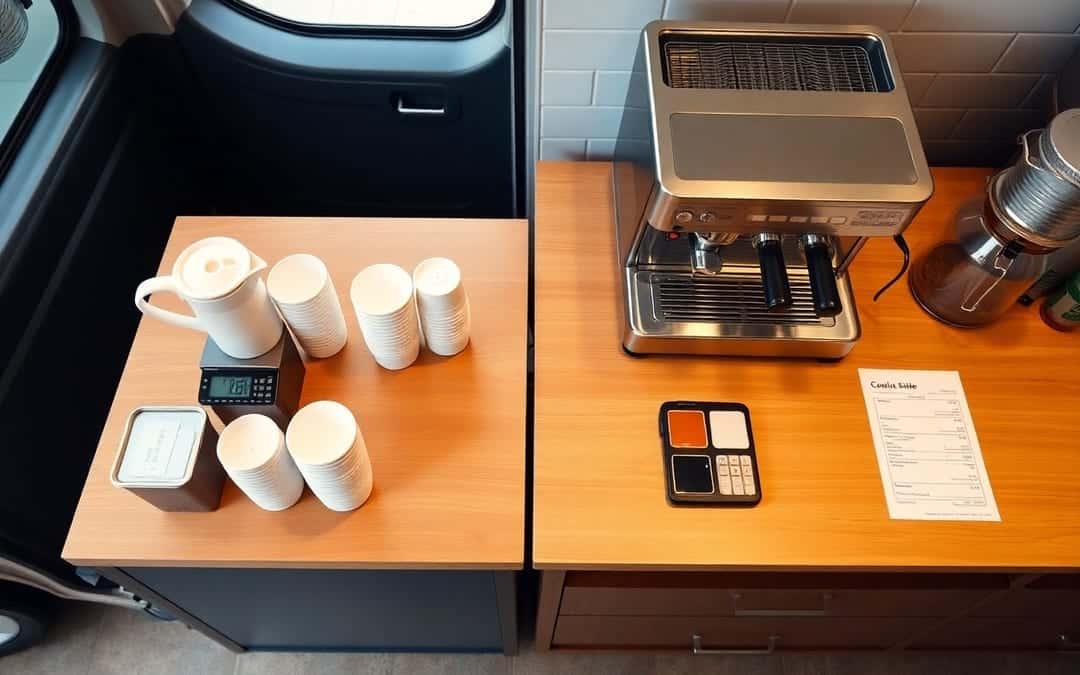
Profitability depends on upfront costs, operating expenses, and location; you must weigh mobile flexibility and lower overhead of a coffee van against the steady footfall and higher margins of a café to decide which suits you.
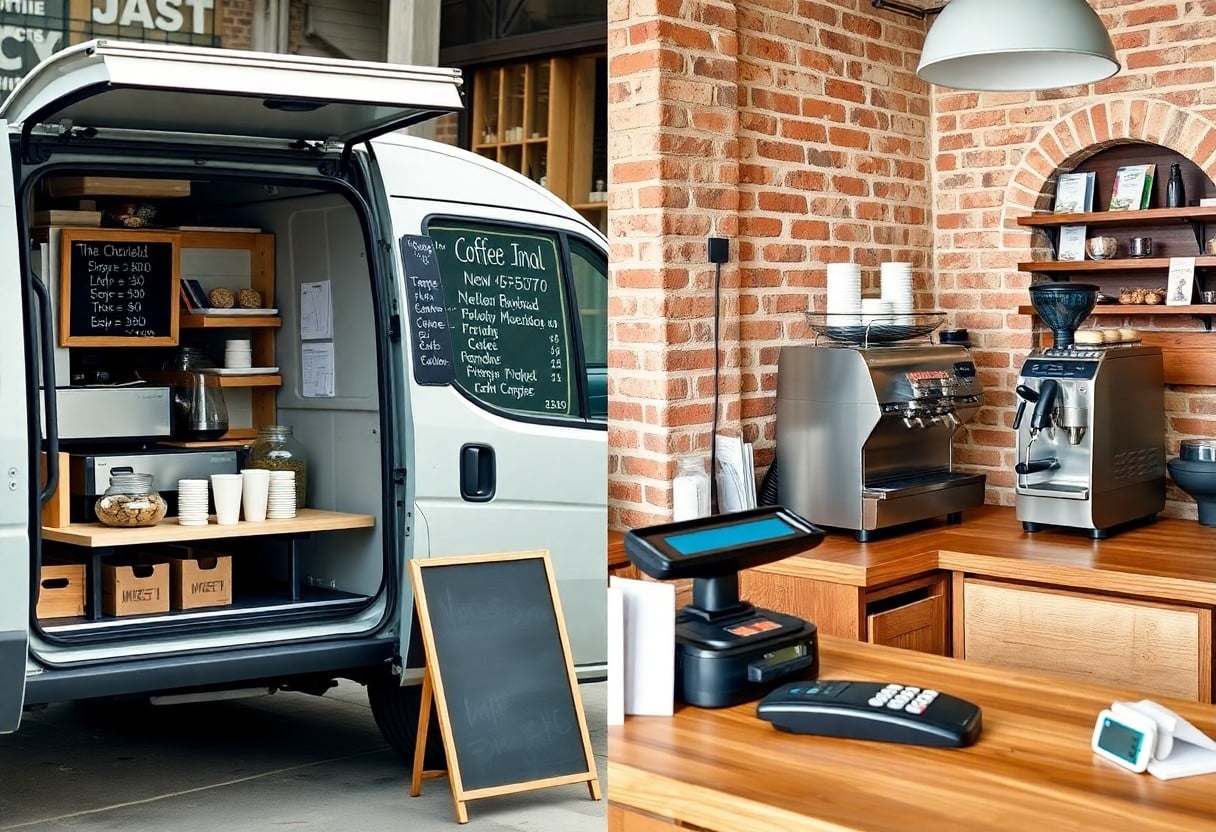
Key Takeaways:
- Coffee vans offer much lower startup and fixed costs (vehicle, compact equipment, permits) and lower monthly overhead, so breakeven often comes faster; limited capacity, weather sensitivity and event-driven sales cap daily revenue.
- Cafés demand higher initial investment (fit-out, lease, staff) and higher ongoing fixed costs, but greater seating, extended hours and expanded menus create steadier revenue and a higher profit ceiling when well located and efficiently managed.
- Profitability hinges on location, volume, pricing and operating model; mobile operations suit low-capex entrepreneurs and event strategies, while cafés suit scale and repeat customers, so run breakeven and margin projections before deciding.
Initial Capital Outlay and Startup Requirements
You will find the coffee van requires a lower upfront outlay for vehicle purchase or conversion, basic equipment and permits, while a café demands larger capital for lease guarantees, extensive fit-out and commercial-grade installations. You should weigh how quickly each model can reach break-even given those distinct startup commitments.
Mobile Unit Procurement and Specialized Equipment
Purchasing or converting a van involves costs for the vehicle, espresso machine, water systems and power generation, and you must factor in refrigeration and storage solutions. You can reduce spend by buying used equipment or modular units, but you must maintain compliance with health and safety standards and accessible servicing.
Commercial Lease Deposits and Interior Fit-out Costs
Securing a commercial space typically requires several months’ rent as a deposit plus legal and agent fees, and you will face substantial fit-out expenses for plumbing, ventilation, counters and seating. You should anticipate longer lead times and higher initial cash requirements compared with a mobile unit.
Budget for deposit amounts often equal to one to six months’ rent, and fit-out costs can vary from modest thousands to tens or hundreds of thousands depending on site condition, planning permissions and equipment needs; you should get detailed quotes before committing.
Comparative Operational Expenses
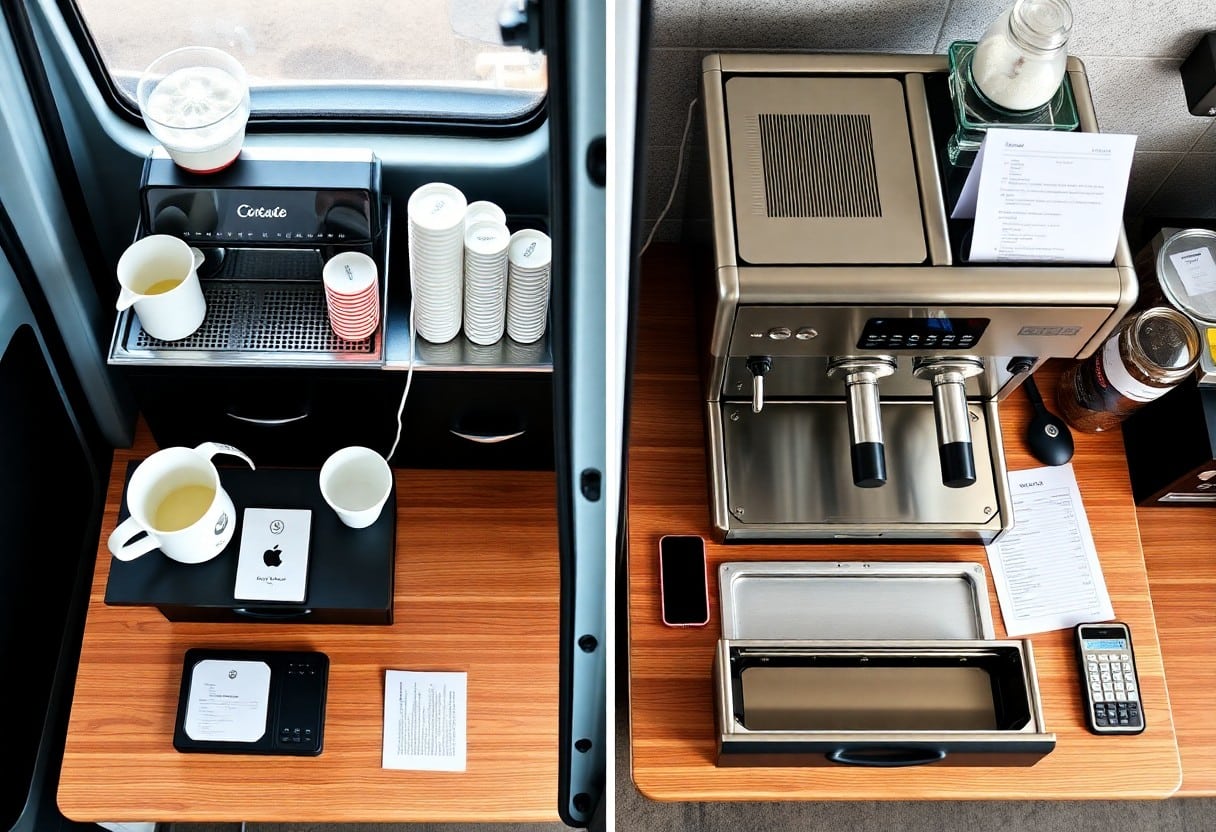
Comparing operational line items helps you spot where fixed and variable costs hollow margins between a coffee van and a café.
Tables below split typical monthly expenses so you can quickly weigh startup, staffing, and overhead trade-offs.
Operational Cost Breakdown
| Coffee Van | Café |
|---|---|
| Pitch fees, fuel, mobile permits, smaller equipment, minimal utilities | Fixed rent, utilities, larger equipment, higher initial fit-out costs |
| Limited staff, flexible hours, low occupancy costs | Multiple staff, set hours, seating and maintenance costs |
| Smaller inventory, higher spoilage risk per item | Bulk purchasing, storage needs, potential waste savings |
Pitch Fees and Fuel vs. Fixed Rent and Utilities
Pitch fees for vans and fuel are variable costs you can control daily by choosing spots and optimizing routes to protect margins.
Fixed rent and utilities make café overhead predictable, so you should budget for peak and slow months and secure long-term leases only after modeling traffic.
Inventory Management and Waste Reduction Strategies
Inventory management on a van forces you to keep tight par levels and rapid turnover so you can minimize spoilage and cash tied up in perishables.
Waste reduction strategies such as portion control, cross-use of ingredients, and daily audits help you trim costs and maintain consistent margins across shifts.
Implementing simple POS-linked stock counts, FIFO rotation, and supplier mini-orders lets you scale orders to demand, cut emergency buys, and improve cash flow.
Labor Costs and Staffing Efficiency
You face very different labor profiles: a coffee van can run lean with one trained operator covering multiple roles, while a café requires scheduled teams, supervisors, and predictable payroll overheads that scale with floor hours.
Calculations should include wages, payroll taxes, benefits, and downtime; you will often find that labor percentage of sales, not absolute payroll, reveals which model is more profitable under your local demand patterns.
Owner-Operator Dynamics in Mobile Units
Operating as the owner-operator reduces direct payroll and gives you control over cost per hour, but you must price time spent behind the counter and consider limits on growth if you remain the primary labor source.
Managing Multi-shift Teams in a High-Volume Café
Schedules force you to balance coverage and cost: overlapping shifts smooth service during peaks but raise labor hours, whereas tight rosters risk slow service, longer queues, and lost repeat customers.
Optimizing staffing requires you to use POS sales patterns, cross-train staff, stagger shift start times, and set clear labor-percentage targets so you can respond to demand without overspending on wages.
Revenue Streams and Sales Volume Potential
Mobile vans can generate spikes in revenue at events and regular routes, so you can enjoy high-margin sales when location and timing align.
Cafés deliver steadier daily volume from repeat customers, which helps you forecast sales and smooth your cash flow across weekdays.
Event-Based Income vs. Daily Foot Traffic Stability
Events reward you with concentrated income but require advance bookings, setup effort, and sometimes unpredictable footfall that you must plan for.
Daily street presence gives you predictable customer flow and smaller but consistent ticket sizes that stabilize your overall revenue if you maintain service quality.
Upselling Opportunities and Menu Diversification
Upsells such as pastries, seasonal drinks, or merchandise increase your average ticket, letting you squeeze more profit from each sale you make.
Menu diversification allows you to target different dayparts and events, turning slow hours into additional revenue streams with minimal extra labor on your part.
Pricing bundles and loyalty offers let you nudge customers toward combos and premium items, helping you boost margins without alienating your regulars.
Analyzing Profit Margins and ROI
You can expect mobile coffee vans to exhibit higher gross margins on drinks due to lower overheads, while cafés must cover rent and staffing that compress net margins; ROI depends on your scale and location.
Coffee vans offer you faster payback on small investments, but cafés produce steadier long-term returns if you capture local footfall and build a reliable repeat customer base.
Average Transaction Value and Net Profit Ratios
Average spend per customer is lower at a van but your variable cost per cup is also reduced, so you must track per-transaction margins rather than raw ticket size.
Net profit ratios for vans can exceed 20% on peak routes while cafés often sit around 10-15% after fixed costs, so you should model both scenarios against local rents and labor.
Projected Break-even Timelines for Each Business Model
Break-even for a van can arrive within 6-12 months if you secure busy locations, while a café frequently requires 18-36 months depending on fit-out and lease terms.
Timeline projections must factor seasonal traffic, marketing spend, and permit costs because those variables will shift your cash flow and lengthen or shorten payback periods.
Estimating monthly fixed versus variable costs and running conservative sales scenarios will help you calculate realistic break-even points and choose the model that matches your risk tolerance.
Risk Assessment and Scalability
Assessing operational risks, you weigh staffing, supplier reliability and regulatory compliance; a café grants steadier control while a van faces mobile permits and site constraints. Scaling through vans lets you expand with lower upfront capital but requires managing multiple units and inconsistent throughput.
Mobile growth options allow you to test markets quickly, yet you must handle vehicle upkeep, fuel and scheduling across locations; cafés demand larger capital and longer leases but offer higher daily capacity and clearer staffing structures for predictable expansion.
Seasonal Vulnerabilities and Weather Dependency
Peak outdoor seasons drive high demand for vans at events, so you should plan flexible staffing and inventory to capture spikes without overcommitting resources during slow periods. Cafés tend to see steadier, if smaller, seasonal lifts.
Cold or stormy weather reduces van sales sharply, forcing you to consider winter storage, off-season contracts or catering to smooth revenue. Cafés retain more consistent income from indoor seating and diversified menus.
Long-term Asset Appreciation and Brand Equity
Cafés provide you with tangible assets-fixtures, leasehold improvements and a fixed location that build long-term customer recognition and repeat sales, which can increase business valuation over time.
Brand strength lets you scale beyond a single address; you can franchise, merchandise or sell goodwill, so you should track customer loyalty and brand metrics to improve exit multiples.
Assets like vans depreciate faster and yield lower resale than a well-maintained café fit-out, so you should model depreciation, maintenance and potential capital appreciation when projecting returns and tax outcomes.
To wrap up
With this in mind you can see that a coffee van lowers your startup and monthly overhead, offering faster break-even through mobility and event sales but limited volume and weather risk. Your choice should reflect available capital, desired hours and appetite for scaling; a café demands higher rent and staff but delivers steadier revenue and greater long-term margins.
FAQ
Q: What are typical startup costs for a coffee van versus a café?
A: Coffee vans generally require lower upfront investment, commonly £15,000-£60,000 for the vehicle, conversion, initial equipment, and permits. Small cafés often need £50,000-£250,000 or more to cover leasehold improvements, rent deposits, equipment, fixtures, and initial stock. Budget ranges depend on location, condition of premises, and level of fit-out.
Q: How do ongoing monthly operating costs differ between a van and a café?
A: Monthly costs for a van usually include fuel, parking or pitch fees, insurance, maintenance, stock, and one or two staff wages; typical totals range from modest to mid four figures. Café monthly costs include rent, utilities, staff wages for multiple shifts, waste disposal, higher insurance, licenses, and larger inventory; these costs commonly run into mid to high four figures or five figures in prime locations.
Q: How do profit margins compare for a coffee van versus a café?
A: Gross margins on drinks remain high for both models because espresso-based products have low ingredient cost as a percentage of price. Net profit margins tend to be wider for vans on average, often 10-30% depending on volume and control of expenses, while cafés frequently see net margins in the 5-15% range after rent and payroll. Actual margins vary with pricing, labor efficiency, and fixed overheads.
Q: How does location and customer flow impact profitability for each model?
A: A van can change location to chase events, office parks, markets, and peak times, which allows rapid reaction to footfall patterns. A café depends on its fixed catchment area and benefits from consistent daily foot traffic, passersby, and local loyalty. Securing a high-footfall pitch for a van or a high-visibility lease for a café drives profitability in both cases.
Q: What are typical break-even timelines for a coffee van versus a café?
A: Many coffee vans can reach break-even in 6-18 months if busy and well-managed, due to lower capital and simpler overheads. Cafés commonly take 12-36 months to breakeven because of larger initial investment and ongoing fixed costs. Speed to break-even depends on sales volume, pricing, and cost control.
Q: What operational risks and constraints should operators consider for each option?
A: Vans face weather sensitivity, vehicle maintenance, parking restrictions, limited prep space, and reliance on permits or event bookings. Cafés face high rent exposure, staffing challenges, longer opening hours, higher fixed utility costs, and stricter building and health compliance. Both must manage supply consistency and quality control.
Q: Which model is better for scaling and long-term profitability?
A: Scaling a van operation can be faster and cheaper by adding vehicles and securing event or corporate contracts, allowing flexible expansion. Scaling cafés builds brand presence and offers multiple revenue streams such as food, seating, and retail product sales, but requires more capital and operational complexity. Choice should align with available capital, risk tolerance, and preference for mobility versus a fixed flagship presence.